
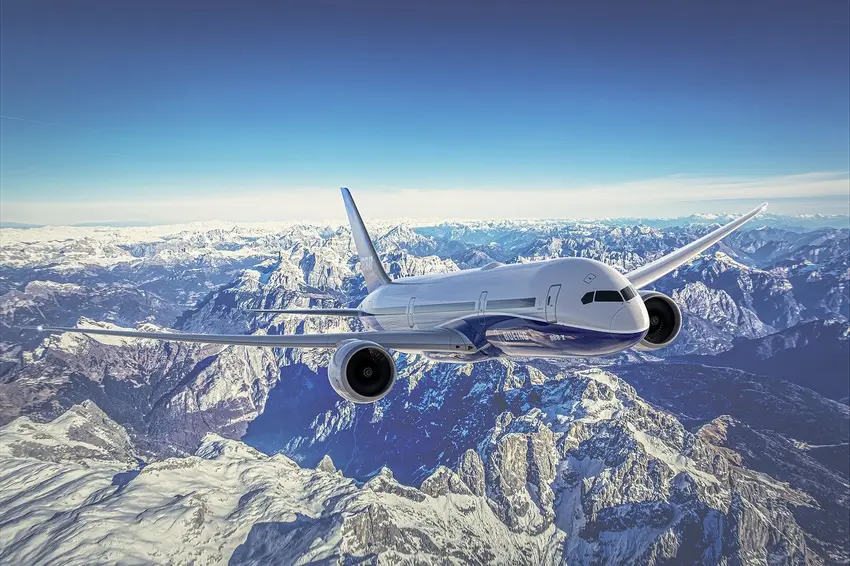
A 2024 incident on a Singapore airlines flight, which left one passenger dead and many injured, was far more severe than the vast majority of cases of turbulence and was believed to have been caused by a "significant altitude drop".
Most cases of turbulence on flights don’t don’t claim lives, or cause serious injuries.
It is therefore important to put this incident in its proper perspective.
However, turbulence on flights is not a rare occurence, as any frequent flyer will tell you.
About 65,000 flights encounter moderate turbulence every year, and about 5,500 hit severe turbulence. This may seem like a lot (especially if you happen to be on one of these flights), but it is only a small fraction of about 100,000 planes that fly, on average, in just one day.
This map shows what the sky looks like on a normal day.
Yesterday was the busiest day for commercial aviation that we’ve ever tracked. We tracked 134,386 commercial flights on 6 July and today is shaping up to be another busy day. More than 20,000 flights are in the air right now. pic.twitter.com/E7wheAo86B
— Flightradar24 (@flightradar24) July 7, 2023
Are some routes bumpier than others?
Indeed they are.
And unfortunately, many of them arrive at, or cross, Switzerland.
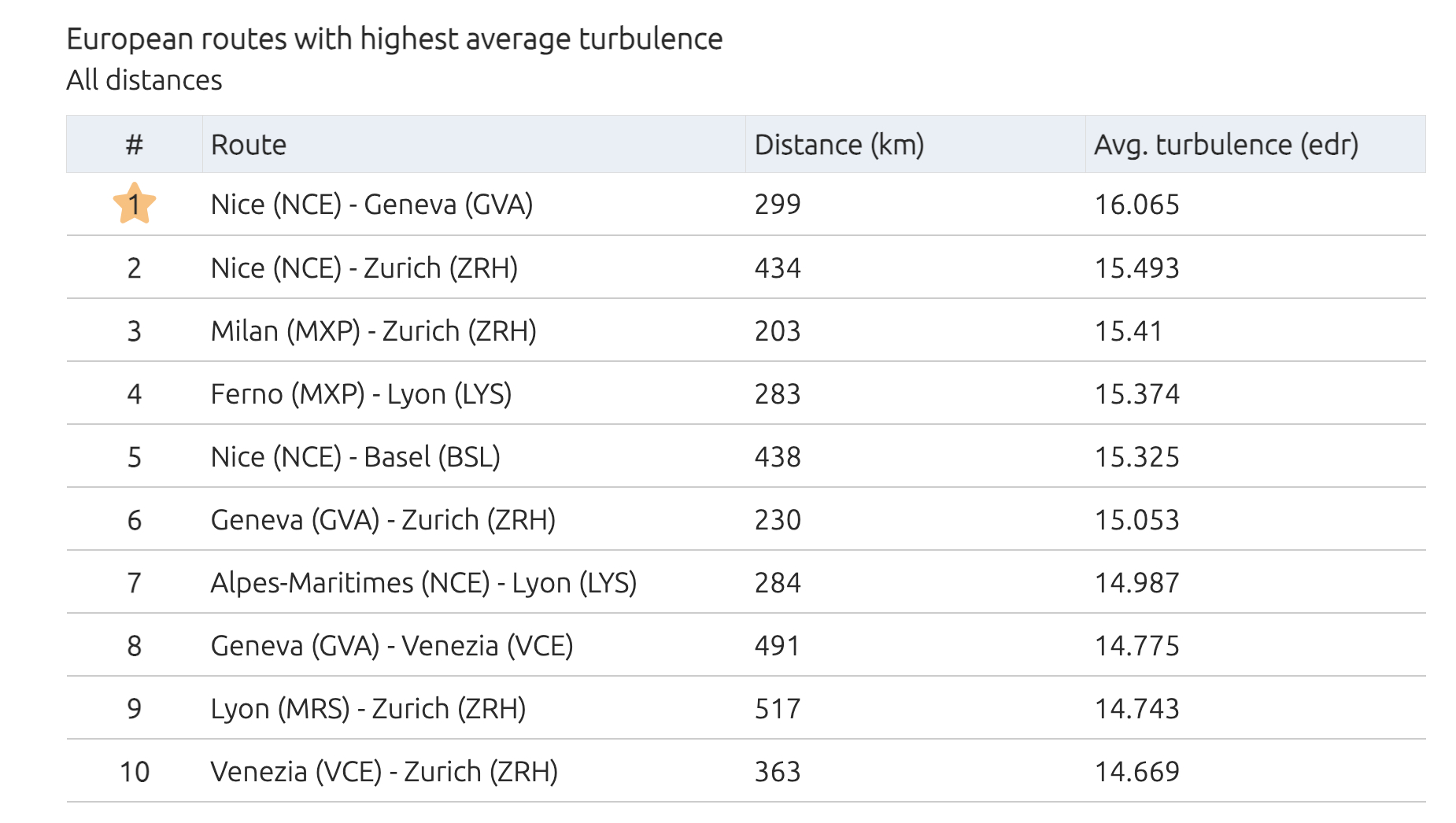
This is what a ranking compiled by 2024 Turbli, a site dedicated to tracking such events, indicates.
The platform has analysed around 150,000 international routes to chart the most turbulent journeys of 2024.
The analysis found — you’d better sit down and buckle up for this — that the flights from Nice in France to Geneva and Zurich are the shakiest in Europe. The Milan to Zurich flight was ranked the third bumpiest in Europe.
Other Swiss flights also make the top 10 including Nice to Basel, Geneva to Zurich, Geneva to Venice, Venice to Zurich and Lyon to Zurich.
Why do ‘Swiss’ flights rank high in terms of turbulence?
The reason, according to meteorologist Lionel Fontannaz, is that on both these routes — that is, from Milan to Switzerland, and from Geneva to Zurich — the plane flies over the Alps, “with southerly and northerly winds passing through it.”
“Certain types of turbulence are greater in mountain regions,” he added.
Turbli founder Ignacio Gallego Marcos agrees that mountains are, indeed, to blame.
He pointed out that routes over the Alps “appear high in the ranking due to mountain wave turbulence.”
The same phenomenon is also known to occur in the Andes,” he said.
Switzerland at the forefront — again
Turbli also rated the most turbulent airports.
Here too Switzerland scored high: Zurich is in the 2nd place in Europe, and Geneva in the 4th, both being surrounded by mountains.
However, while smaller aircraft could be more prone to jolting than big planes, turbulence doesn’t distinguish between airlines.
While only SWISS operated the internal flight between Geneva and Zurich, the Milan-Zurich/Geneva route is operated by both SWISS and Alitalia.
Comments