
Out of around 230,000 words making up the Italian vocabulary, over 23,000 are considered to be of foreign origin.
And though Arabic may not have had as big of an influence on Italian as other foreign languages, including Greek, English, Spanish and French, the Italian vocabulary still counts over 600 arabismi – words borrowed directly from Arabic which have become so integrated into everyday language over the centuries that most people don’t even know they weren’t Italian to begin with.
Here's a look at some of the most common ones.
Caffè
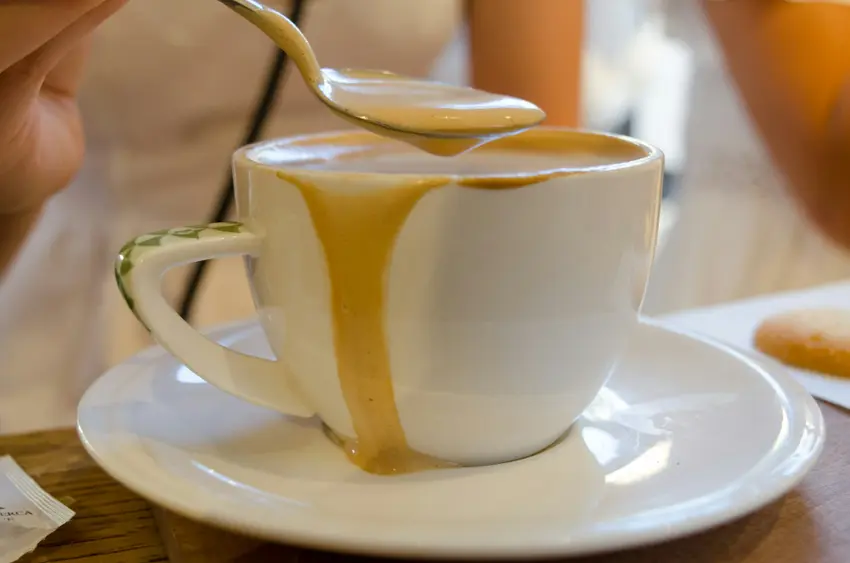
Coffee is a quintessential element of Italian culture and identity, but the word for the drink actually comes from the Arabic word qahwa.
Qahwa first made its way to Italy in the 16th century, when Venetian traders brought it back from the Ottoman empire.
Coffeehouses started popping up in Venice in the late 1600s, and by the mid-1700s there were over 200 of them, with customers often including some of the greatest artists, writers and poets of the time.
Over the centuries, coffee became a staple of Italians’ diet and an integral part of the country's social life.
Zucchero
If you’re not a fan of black coffee and tend to soften its bitter, earthy aroma with one or two teaspoons of sugar, bear in mind that the Italian word zucchero (which gave origin to the English ‘sugar’ by way of the Old French term sukere) also comes from an Arabic word: sukkar.
We can thank the Arabs not just for the word, but also for bringing sugar to Europe after they settled in Spain’s Andalusia region in the 8th century and in Sicily in the early 9th century.
Tazza
Even the tazza (‘cup’) you sip your morning cappuccino out of is an Arabic borrowing, as it comes from ṭāsa, originally meaning ‘bowl’.
Azzurro
The national flag may be red, white and green, but when it comes to sports, Italians are all about a different shade: azzurro (or ‘azure’), a specific shade of bright blue which the Treccani Italian dictionary defines as being "the colour of a clear sky”.
Both the Italian word and its English equivalent come from the Arabic word lāzaward, which originally referred to lapis, a particular type of blue stone mined in what is now northern Afghanistan.
You can see the same root in the Spanish word azul and the French azur.
Ragazzo
The word ragazzo (which means ‘kid’, or ‘young man’ but is often extended to refer to friends or acquaintances of any age) is believed to derive from the Arabic word raqqa sò, which originally meant 'messenger boy' and is still used in some regions of northern Africa to mean 'postman'.
READ ALSO: The essential vocabulary you'll need for an Italian summer
Raqqa sò later evolved into the late Latin ragazium and then the Italian ragazzo, and the meaning got diluted so that now it simply means 'boy'.
Alcol
Inhabitants of the peninsula now known as Italy have been fermenting cereals and grapes to make alcoholic drinks for millennia, but the word alcol is a more recent import.
The Italian word for alcohol comes from the Arabic word kohl, which was used to signify a “very fine antimony powder”.
In the 16th century, Spanish speakers took the term kohl and turned it into alcohol, which then meant “a very fine and pure element” of which the “essence was obtained through distillation” – which we today know as the magic little ingredient found in Italian wine, beer and a host of other tipples.
Magazzino
Magazzino (‘warehouse’) is another word the Italians borrowed from the Arab world as it comes from maḵāzin, meaning ‘storeroom’ or ‘storehouse’.
Albicocca
Apricots are a national favourite when it comes to mid-afternoon snacks (or merende) in the summer months, but the Italian word albicocca isn’t very Italian at all as it comes from al-barqūq, meaning ‘plum’ in Arabic.
Giubbotto
The Italian word giubbotto, meaning ‘jacket’, comes from the old Italian word giubba, which in turn derived from the Arabic jubba.
Jubba originally referred to a long tunic worn by men in the Arab world. It is even mentioned in the Islamic Hadith, which contains the teachings of prophet Muhammad.
Divano
There are very few things as satisfying as slumping against the cushions of your couch after a hard day of work.
The Italian word for couch, divano, is also of Arabic origin.
The word dīwān originally described registry offices in the Ottoman empire, where scribes would work while sitting on cushions.
Meschino
The word meschino exists in French and Spanish too as mesquin and mezquino, but comes from the Arabic miskīn, which means ‘poor’.
Italians use it to describe something as ‘paltry’ or ‘scant’ (for instance, uno stipendio meschino is a ‘meagre salary’) or to say that someone is ‘mean’ and ‘contemptible’ (for instance, un parente meschino is a ‘mean relative’).
Comments