

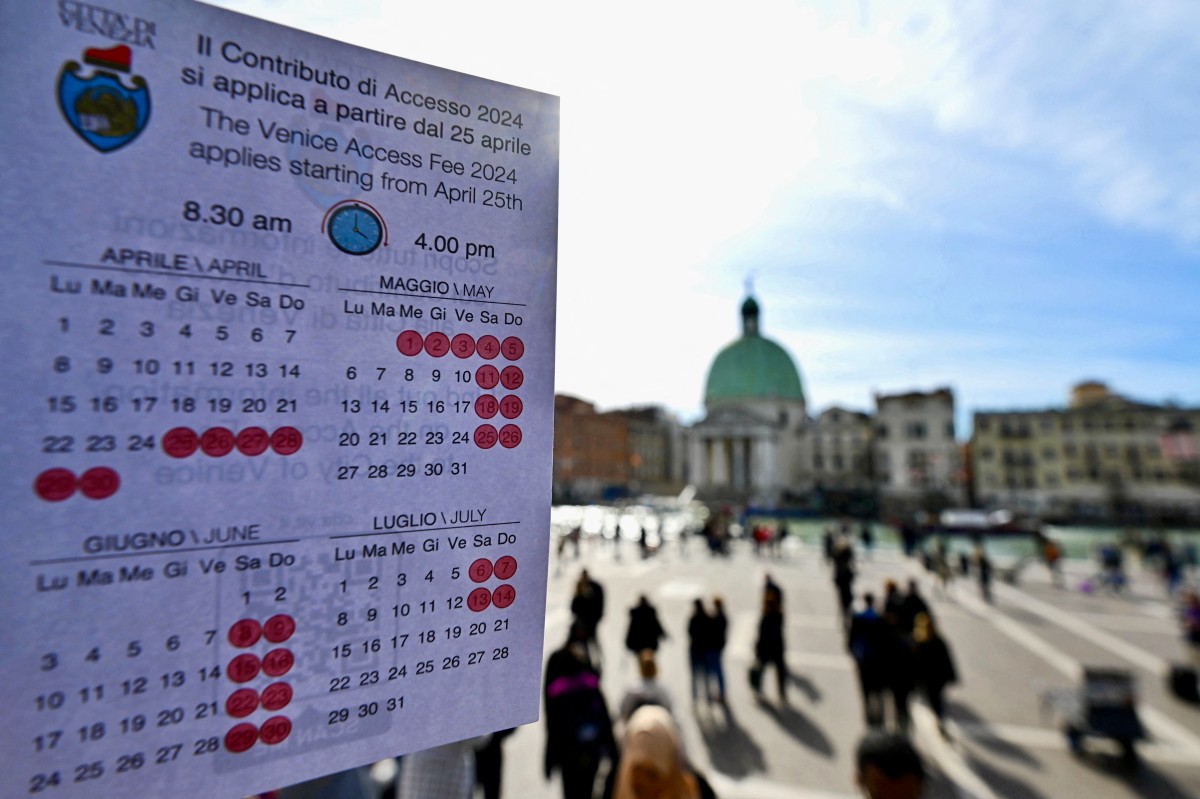
Venice’s trial of a contested five-euro entry fee intended to reduce crowds and lessen the impact of mass tourism came to an end on Sunday, July 14th.
But while city officials hailed the scheme as “a success” and vowed to bring it back in 2025 with a higher fee, opposition councillor Giovanni Andrea Martini, with the Tutta la Città Insieme (All the City Together) group, told The Local he viewed it as a “resounding failure”.
“It was introduced as an instrument designed to manage tourist crowds, but it’s managed nothing, as we expected,” he said.
READ ALSO: Venice says entry fee could double in 2025 with visitor numbers to soar
Tourist figures on key trial dates viewed by Martini’s city council group “show an average increase of between 5,000 and 10,000 visitors per day on peak days compared to last year, which makes it evident that [the scheme] has failed to meet its goal,” he said.
But the entry fee’s failure went far beyond managing tourist numbers according to Martini as “Venice was transformed into a theme park” with residents being “forced to demonstrate that they lived here” to claim their entry fee exemption and becoming “prisoners of their own city”.
Fundamental privacy rights were also “violated” as the system required visitors to share the personal data of relatives or friends living in the city in order to get an exemption, he said.
But if the entry fee scheme is to be viewed as a failure, how do those opposing it think Venice officials should approach the city’s chronic overcrowding issues?
Martini said the top priority should be “repopulating Venice” after “tourism essentially emptied out the city,” with the local resident population going from around 174,000 people in 1951 to just over 49,000 in late 2023.
“We need to re-establish a balance between residents and tourists by turning short-term tourist lets into lets for residents. This will result in a far lower number of tourists staying overnight and will also increase the quality of life for residents”.
“Dividing the city into different areas and introducing a cap on tourist lets for each one” could be a viable option to that end, he said.
The cap on short-term lets “could be set at around ten percent of the total number of houses available for rent” as this would be “compatible with an appropriate number of long-term residents,” he added.
Venice authorities were reportedly considering limiting tourist rentals in March 2023 under wider plans to free up housing for residents and push rents down in the midst of a full-blown cost of living crisis.
In April, following weeks of pressure from local opposition, budget councillor Michele Zuin said that a draft bill aimed at curbing Airbnb-style lets was “ready”, but there has since been no further development on the subject.
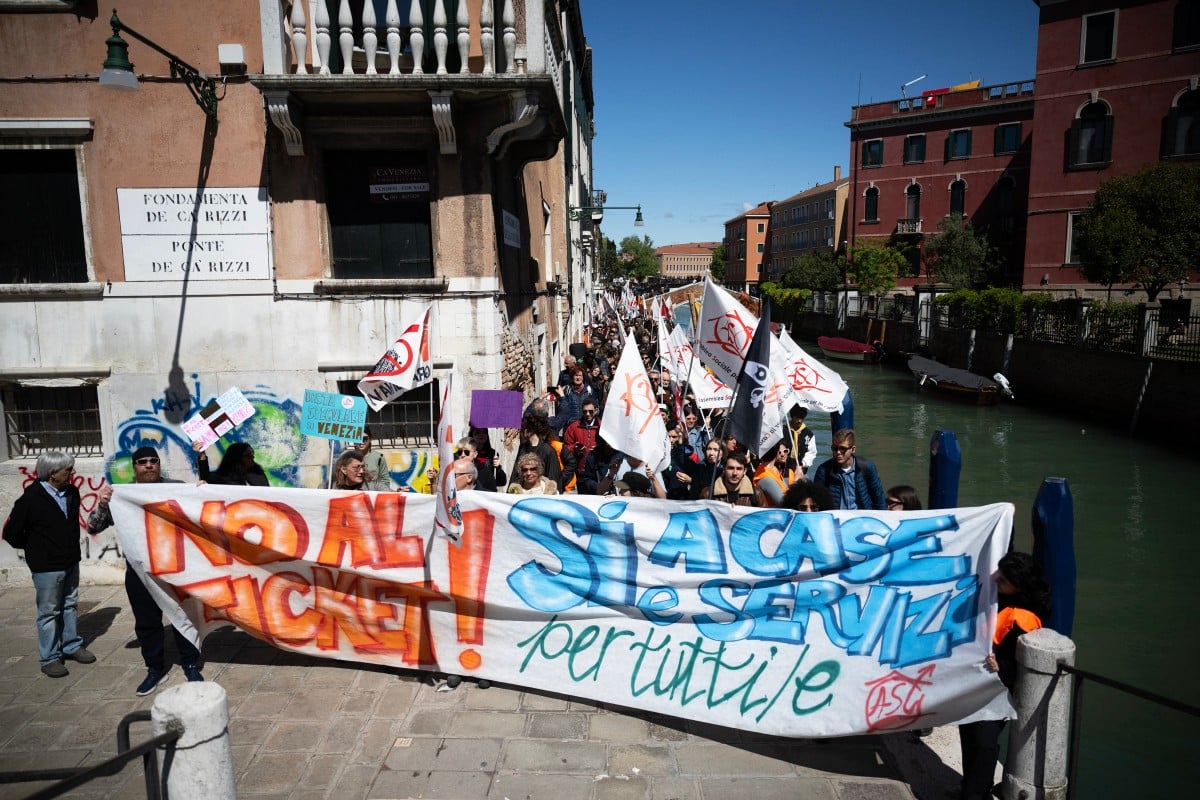
Besides a cap on short lets, Martini also stressed the importance of reducing the number of day-trippers, but rejected the current administration’s idea of opening the city’s gates “upon payment”.
READ ALSO: How well is Venice's 'tourist tax' working?
He said that “making deals with transport operators to regulate the influx of large boats taking tourists to Venice” would be an effective and relatively easy solution.
“Setting up a free-of-charge booking system for visitors” to track prospective arrivals and “deter tourists from visiting on a particularly busy day” could also be an option, though that shouldn’t involve any request for personal data, he added.
Barring plans to curb tourist lets, none of the measures suggested by local opposition so far seem to be under consideration by city officials, which is why frustration is growing among locals, according to Martini.
After protests marked both the start and end of the entry fee trial, “there will soon be further mobilisation” in the form of citizen demonstrations at a grassroots level, he said.
“Venice residents are exasperated, and they’ve been led to this situation by policies that are ill-suited to tackling overtourism.
“The problem is that there’s no real tourism management in this city.”
Comments