
Vehicle inspection
In Italy, cars must undergo an inspection (revisione) on a regular basis.
The first is required four years after registration (immatricolazione) and can be done at the offices of the Motorizzazione Civile (Italy’s driver and vehicle licensing authority) or at any authorised car repair shop (autofficina).
After that, cars must be inspected every two years. More information can be found here.
Carrozzeria v Autofficina
If you have a car body problem, like a dented fender (parafango ammaccato), you should go to a body shop (carrozzeria).
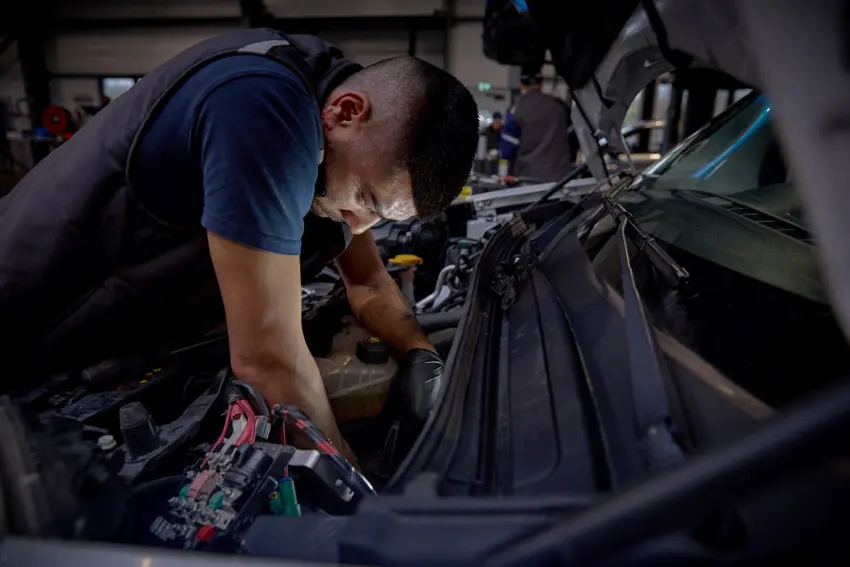
For more serious issues, including engine problems (problemi al motore), you’ll have to go to a repair shop (autofficina) and hand over your vehicle to a mechanic (meccanico).
READ ALSO: Five things you always need to have in your car in Italy by law
Routine work such as changing the oil (cambio dell’olio) can often be done at a petrol station (benzinaio).
Gears and brakes
In Italy, manual cars (macchine a cambio manuale) rule the road, though automatic cars (macchine a cambio automatico) are becoming more popular.
You could need work done on the gears (marce) or clutch (frizione).
The fault could be with the gearbox (scatola del cambio), clutch plate (piastra della frizione) or the clutch friction disc (disco di frizione).
If you can smell burning and are having trouble changing gears, the flywheel (volano), which helps smooth out the engine's pulses, could be damaged.
Brakes (freni) get a lot of wear and tear, meaning you’ll need to have the brake pads (pastiglie dei freni) changed sooner or later.
If your brakes go soft and you have to push much harder on the pedal to slow the car down, this could be a problem with the brake servo (servofreno), a hydraulic or pneumatic system for reducing the force you need to apply when braking.
You might also have leaking brake fluid (olio dei freni).
Other car parts
If your mechanic starts talking about the catalizzatore, they are referring to the catalytic converter, part of the emissions system, which sometimes needs repairing or replacing.
The camshaft (albero di camme) can sometimes be the cause of costly problems.
The carburettor (carburatore) could also give you troubles. These may involve replacing the gasket (guarnizione).
The cylinder head (testa cilindro or testata) is much less likely to cause problems, but if it does, it will come with a hefty charge.
Tyres
There are two words for tyre in Italian: pneumatico and gomma, with the only difference being that the former is considered more formal.
Pneumatico looks tough to say, but you just have to pronounce a ‘p’ then an ‘n’ really fast. Hear it pronounced here.
READ ALSO: Can you be fined for driving a foreign-registered car in Italy?
For any tyre-related issues, including a flat tyre (gomma sgonfia or gomma a terra), you’ll go to a tyre shop (gommista).
The gommista will also be responsible for fitting your car with winter tyres (gomme invernali).
Motorists in Italy are required to equip their vehicles with winter tyres or, alternatively, keep snow chains (catene da neve) on board during the cold season. See further details here.
If you switch to winter tyres during the cold months, remember: you’ll then have to make the switch back to summer tyres (gomme estive) by May 15th.
Breakdowns
If your car breaks down (avere la macchina in panne) and there’s no way of getting it to start, you can call roadside assistance (soccorso stradale) at 803 116.
They’ll send a tow truck (carro attrezzi) your way to tow (trainare) your car to the nearest repair shop.
The issue may be a simple fix. For instance, your car may have run out of petrol (essere senza benzina) or you may have a flat battery (batteria scarica).
If you find yourself in an accident (incidente stradale), there are a number of steps you’ll need to follow. See more details here.
Comments