
Inside Italy is our weekly look at some of the news, talking points and gossip from Italy that you might not have heard about. It’s published each Saturday and members can receive it directly to their inbox, by going to their newsletter preferences or adding their email to the sign-up box in this article.
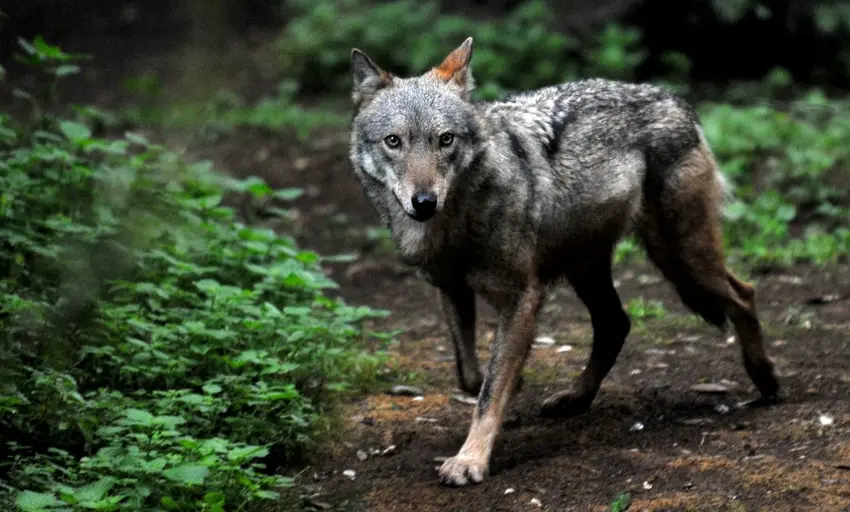
Italian wildlife has been making national headlines in recent weeks after the upper house of parliament approved a draft decree which, if passed into law, would grant regional authorities the power to cull a set number of wolves every year for public safety and security reasons.
This was the first key step in the decree’s legislative process, with the law now moving to the lower house of parliament for the final seal of approval.
Trentino Alto Adige’s Südtiroler Volkspartei (SVP) party, which first tabled the law proposal, hailed the recent approval as “a step forward in managing these animals with a focus on safety and the protection of public health”.
“Regions and autonomous provinces must be placed in a position to act quickly whenever the presence of large carnivores poses a danger” it said, noting how “the province of Bolzano alone has paid out around 200,000 euros in compensation for damage caused by wolves” over the past two years.
The approval was also welcomed by PM Giorgia Meloni’s Brothers of Italy party, with MP Carlo De Luca saying it was a “significant development” for the safety of farmers and citizens following near-daily “cases of preying on livestock, as well as attacks on pets”.
But parliament’s go-ahead sparked outrage among wildlife conservation associations, with the National Animal Protection Agency labelling the decree as "wolf-killer law” (norma ammazzalupi) and accusing the government of “reintroducing wolf hunting and paving the way for the species' eradication from Italian territory”.
Much like bears, wolves in Italy have been a polarising subject in Italy in recent years. The overall population went from around 100 animals in the 1970s to over 3,300 in 2021 thanks to nationwide conservation policies and a hunting ban.
But as the number of wolves increased, so did the number of attacks on livestock in both Alpine and Apennine regions, followed by farmers’ calls to manage the carnivores.
It’s currently hard to predict whether or not the draft decree will ultimately be passed into law, but I can’t help but wonder whether culling is the only possible approach to the problem, especially as there’s no consensus among experts that culling measures are actually effective in the long term based on examples offered by neighbouring Switzerland.
If indeed there are alternatives to culling, they should be explored first, with culling kept as the last available course of action.
Is birra getting cheaper?
If you live in Italy and beer is your go-to tipple, you may soon get a lucky break.
Earlier this week, parliament’s Agriculture Committee backed a proposal included in Italy’s 2025 budget bill to reduce excise duties on beer by as much as 50 percent.
If passed, this will result in beer in Italy costing noticeably less from January of next year.
Available reports didn’t provide exact figures as to how much you may save up on your birra come January but said excise taxes account for around 80 cents when it comes to an average draft beer bought at a bar or restaurant in Italy, and around 40 percent of the final consumer price of an average 0.66-litre bottle of beer found at supermarkets and minimarkets.
As something of a beer aficionado myself, I’m keeping my dita incrociate (‘fingers crossed’) for this one.
Festa di San Martino
It may not be a public holiday, but that doesn’t mean St Martin’s Day (or Festa di San Martino), falling on November 11th every year, isn’t celebrated around Italy.
This Catholic observance, which honours Martin of Tours – a Roman soldier who became a monk and then the third bishop of Tours, France, in the fourth century AD – is marked with a number of curious traditions and special recipes across the peninsula.
For instance, in Sicily, the festa is tied to the end of harvest season, with locals eating roasted chestnuts and washing them down with glasses of vino novello (literally ‘new wine’ – a light, fruity red wine similar to the French Beaujolais nouveau).
In some parts of the central Abruzzo region, residents prepare pizza coi quattrini, a sweet made with cornmeal, walnuts, dried figs and honey…and a coin hidden inside for good fortune.
In Veneto, it’s traditional for locals to prepare il cavallo di San Martino (St Martin’s horse) – a shortcrust pastry biscuit shaped like a soldier on horseback and decorated with sugar glaze, pralines, candies and chocolates.
Sabato a #Venezia è festa, si mangia il dolce di San Martino, una tradizione che risale a molti secoli fa: https://t.co/XA2twH6ya5 pic.twitter.com/QdxWaCindS
— Andrea (@pizzo_76) November 7, 2017
Regional traditions and recipes celebrating St Martin's Day are too many to be counted across Italy, and we'd be keen to know how the occasion is marked in your own area. You can share that with us in the comments section below or at news@thelocal.it.
Inside Italy is our weekly look at some of the news and talking points in Italy that you might not have heard about. It’s published each Saturday and members can receive it directly to their inbox by going to their newsletter preferences or adding their email to the sign-up box in this article.
Comments