
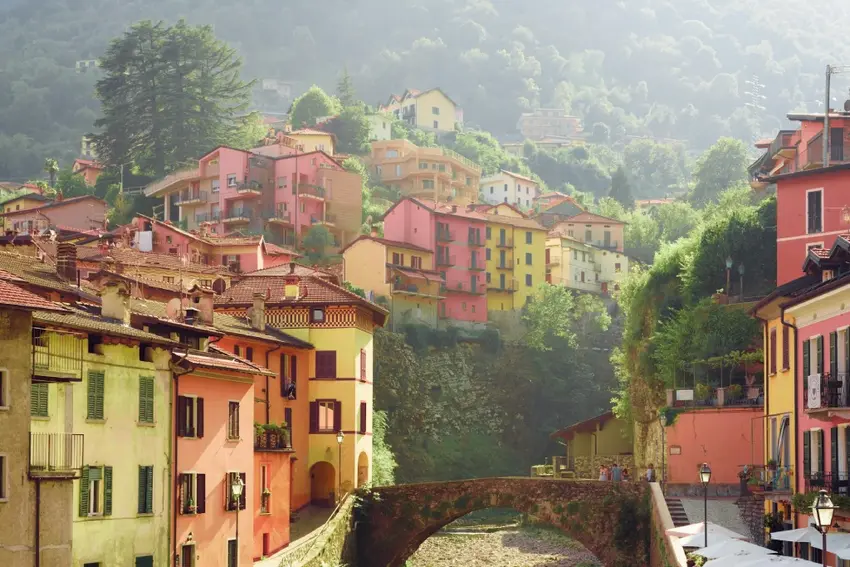
Picture-perfect landscapes, a slower pace of life, more affordable cost of living, and proximity to nature all make small towns and villages around Italy an appealing option for foreign residents looking to relocate from abroad.
But moving to a small town comes with some challenges and lifestyle changes that can be hard to navigate at first.
Small towns can be isolated, meaning you may have to travel dozens of kilometres to reach the closest major city.
And there may be little in the way of public transport, which means you’ll likely have to rely on a car to move around.
Furthermore, it can be difficult to make friends in small, tight communities that may not be used to the sight of a straniero (foreigner).
But all these challenges don't mean that you can’t make a small town or village your home. It just might take a bit more time and effort than elsewhere.
Here are some tips to help you make the transition smoother.
Don’t wait to learn the language
Perhaps the most essential tool when moving to a small town in Italy is knowing the language.
“It takes more than a language class,” says Liz Heath, a travel writer who started a small tour company after living in a small village in Umbria for 15 years.
“You have to fight that tendency to speak English and really engage with people.”
Classes are a great place to start, and some towns may even offer language courses for foreign residents through the comune (city hall).
But learning the language involves more than just familiarising yourself with the grammar, and small-town veterans say that ‘immersing’ yourself in Italian is always the best solution.
“Only watch Italian TV. Only listen to Italian radio. Read the paper every day,” says Emma Mazzega-Ward, a British citizen who moved to a small town outside of Varese, Lombardy, five years ago.
“It has been a lot harder to integrate in a small town, but I guess that’s my fault because I can’t communicate the way I would like to.”
READ ALSO: 'Make a fool of yourself!': The best ways to learn Italian if you live in Italy
She has found learning the language at the age of 50 to be the biggest hurdle to getting to know her neighbours.
“But I absolutely love living here,” she says.
"I am looking forward to the day when I can have a conversation about normal things with people.”
Find your people
When moving to a new environment, one of the best way to get to know people and find friends is to join a local group, take a class or start a new sport. Sharing activities with others is a great way to get to know them.
That was the experience of Ellie, a photographer who moved from the US to Cardano, a small town in Lombardy, five years ago.
“I have been fortunate to find some awesome new local friends who offered to teach me or show me new things that I had no skills for, like loving plants,” she says.
“I first met those friends at a local plant exchange event, part of a town festival. Integration is a two-way street.”
Some towns offer hobby-related courses through the comune or other local associations.
Another great place to look is Facebook, as it contains hobby- and location-specific groups that often organise meet-ups.
If you can’t find a group for something you already enjoy, make one yourself. Start a gardening club, a runner’s meet-up, or a weekend hiker’s group.
Small communities thrive on local social events, so another way to get involved could be through volunteering.
Local associations, including public libraries, Pro Loco organisations and religious associations, may all offer some volunteering opportunities.
Get a (small) car
You might think that all small towns in Italy have walkable centres where you can find everything you need – from the bakery and produce stands to the post office and the tabaccaio (tobacconist). But that isn’t always the case.
Using public transport to get around may not always be possible as services tend to be scarce (and often unreliable) in rural areas.
READ ALSO: Which countries have driving licence exchange agreements with Italy?
This means that having a car may be the only way to access all that a town has to offer.
If you plan to get a car, remember that roads can be narrow, so it’s best to opt for a smaller vehicle, such as a Fiat Panda or Lancia Y.
Invest in fast internet
Although the Italian government is working on expanding broadband access across the country as part of its post-pandemic recovery plan, internet connection can be spotty in the most isolated areas of Italy.
This is something you should consider, especially if you work from home.
A satellite connection could be a good solution for faster internet.
It is available across the country via Starlink and other service providers.
Starlink's internet plans cost between €29 and €40 a month, plus around €350 in installation costs.
Savour the local food
Smaller communities take pride in their local culinary traditions.
If you’re lucky, your new neighbours will stop by unannounced just to bring you jars of tomato sauce they made themselves or a basket full of figs they picked from their garden tree.
It’s also worth getting to know some local producers, so that you can fully absorb the importance of local culinary traditions.
Visit the weekly markets, ask for a tour of a nearby farm, or talk to a local restaurant to find out the best places to get meat, cheese or veggies.
And always accept an invite to share a meal in someone’s home – even if it’s a five-hour-long Sunday lunch.
Embrace the new pace
As you gradually find your place in your new home, don't forget to appreciate what small-town life has to offer.
You’ll likely find that meals are longer, shops take long lunch breaks, and no one is in a rush. This is a far cry from the chaotic city pace you may be used to.
READ ALSO: Dutch, Swedish, Scottish: How these tiny Italian villages became international
Learn how the locals sit back and relax. Maybe it’s a walk through the town centre, a chat with an elderly neighbour, an aperitivo always at the same spot, or a game of cards at the local bar.
Welcome these opportunities to give yourself the balance you might be looking for.
Give it time
Moving to a new country comes with a world of changes. And when your new location has a tiny local population or is in a rural area, there are further challenges.
Adapting to these things may take time, as will getting settled – from finding a house and sorting out work to getting your documents in order.
But, whether it's centuries-old local traditions, being closer to nature or a slower pace of life, there is a lot to love about small-town life in Italy.
Comments (1)