
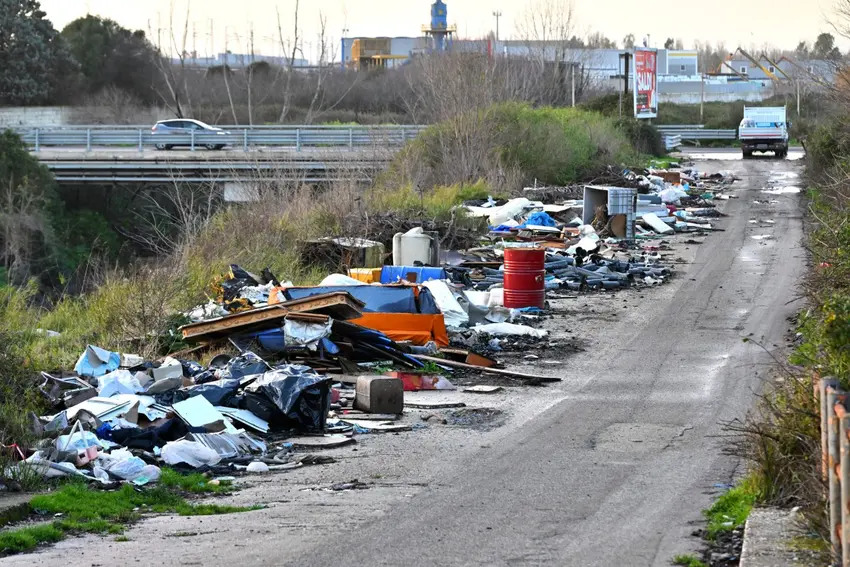
The Strasbourg-based court ruled that Italy was aware of the illegal dumping, burying and burning of hazardous waste by the mafia in Campania – but failed to act.
Cancer rates are well above average in the 'Land of Fires' region, which is home to Antonietta Moccia, one of 41 people who filed the complaint with European judges.
Moccia's daughter, Miriam, was diagnosed with a brain tumour at the age of five. The medulloblastoma that struck her occurs in around 1.5 people in a million across Europe.
But "in the hospital there were three other cases" from their hometown of Acerra, Moccia told AFP.
"We are invisible, nobody listens to us," she said.
Moccia is waiting for the territory to be cleaned up and for compensation "to help other families", saying that she herself received no help except from family and friends.
Miriam, currently aged 18, has her cancer "under control" and she "is moving forward and wants to turn the page," her mother said.
The European Court of Human Rights on Thursday gave Rome two years to draw up a "comprehensive strategy" to deal with the situation.
The plan should see the establishment of an independent monitoring mechanism and of a public information platform, the court said.
Lawyer Antonella Mascia said it was an "historic verdict".
"It urges [Italy] to resolve this enormous problem, which affects not only our clients but everyone who lives there," Mascia added.
For decades, industrial waste – often from northern Italy – was burned in the open air in this large area.
Instead of paying exorbitant sums to have waste disposed of legally, companies paid the Camorra a fraction of the cost to dump it in fields, wells and lakes.
Anything from broken sheets of asbestos to car tyres and containers of industrial-strength glue was burned or left to rot, polluting the air, soil and water.
Years after the issue was made public, mounds of rubbish still lie near waterways, along roads, and in fields where sheep and goats graze.
'Two heads'
Alessandro Cannavacciuolo first knew something was wrong when his sheep gave birth to "deformed lambs, with two heads, two tongues, tails on the side" in the early 2000s.
"We no longer had lambs, but real monsters," the former farmer told AFP.
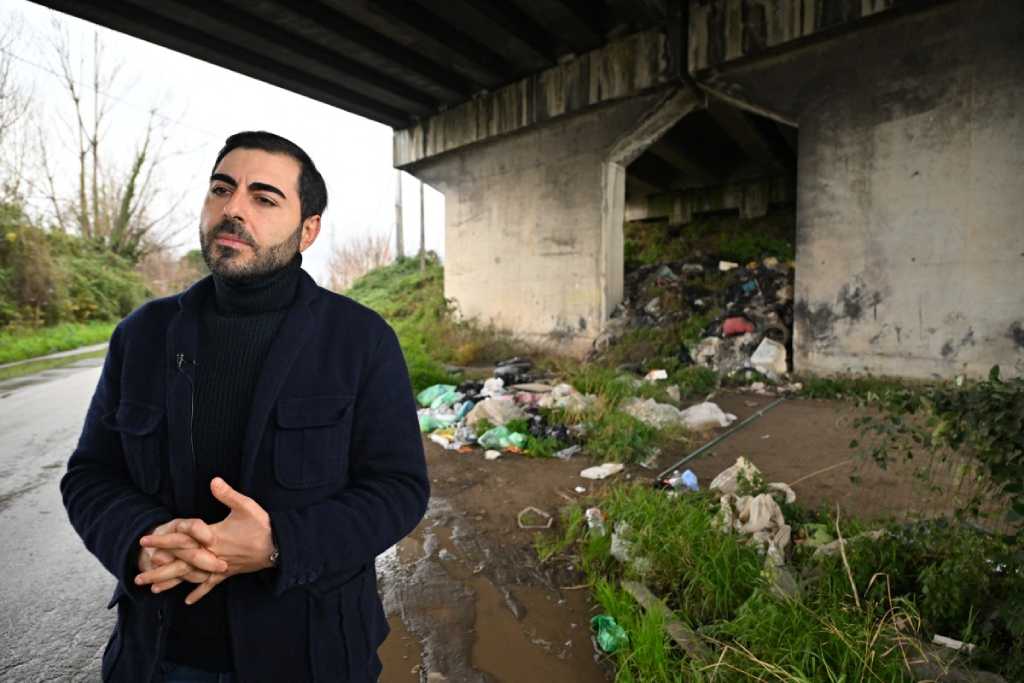
As his friends and relatives also fell sick, Cannavacciuolo took it upon himself to find and report illegal dump sites – at great personal risk.
"We are at war. Anyone who raises their voice, anyone who points out these criminal activities, is threatened," he said.
"Our cars have been shot at, our animals have been killed, we have received threatening letters," he added.
In 1997, a mafia turncoat revealed that hazardous waste had been buried in the area since at least 1988, and parliament was informed.
But it wasn't until 2013 that the government adopted a decree officially referring to the 'Land of Fires'.
Since then, a host of parliamentary inquiries have found local authorities negligent and in some cases complicit.
They have also highlighted the health fallout, including a major increase in cases of cancer and foetal and neonatal malformations.
In 2018, the Senate's Hygiene and Health Committee said that criminality and political inaction had caused an ecological disaster, while in 2021 Italy's National Health Institute officially recognised the correlation between pollution and cancer rates.
Neither the government nor the Campania region responded to an AFP request for comment.
Armando Corsini, a lawyer for the plaintiffs, said he was not surprised by their silence, saying they have yet to admit responsibility.
The state "has done nothing to protect these victims and ensure that other cases do not occur," he said.
Comments