
Hunting for suitable accommodation in Italy can be a challenge, whether you’re renting or buying.
In cities like Milan and Rome, competition is fierce, and property listings come with poetic descriptions that may not match reality.
Sometimes “charming” really means charming – other times, it means damp walls, oddly shaped interiors, and no lift.
Here are some of the Italian words and phrases that regularly crop up in real estate listings where the agent is working a little too hard – and what they really mean.
READ ALSO: What will happen to property prices and rents in Italy in 2026?
Palazzo d'epoca (Historic building)
A palazzo d’epoca might sound romantic, and may well come with original stone or wooden flooring, exposed beams, and other elegant period features.
But historic residences also often mean poor insulation, faulty wiring, leaky plumbing, and terrible energy ratings.
There are also significant restrictions on what you can do to a listed building in Italy, complicating matters if you want – or need – to carry out renovations.
READ ALSO: Key questions to ask before buying your dream home in rural Italy
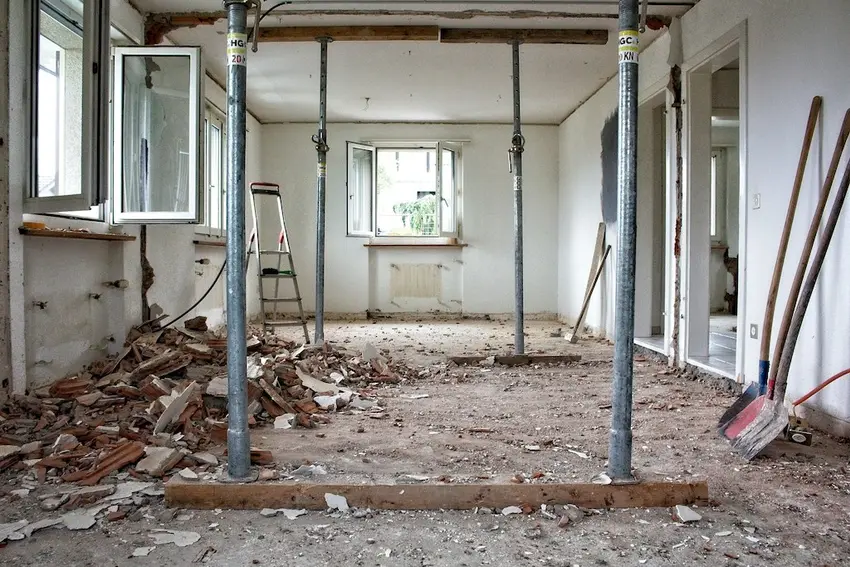
Da ristrutturare (Fixer-upper)
Listings that advertise a property da ristrutturare, or in need of renovation, tend to underscore the benefits of being able to put your own stamp on the place.
This might appeal to some buyers, but you’ll want to make sure you have enough money left over to pay for the works, which will almost certainly run over budget – and the property should be priced to factor in the extra investment required.
READ ALSO: The Italian home renovation bonuses you can claim in 2026
Zona animata/ben collegata (Lively/well-connected area)
If a neighbourhood is advertised as animata or vivace, it’s a good idea to pay it a visit on a Saturday night: you may find the bench right outside the bedroom window is a favourite late night/early morning weekend hangout spot for local university students.
Similarly, an area that’s described as ben collegata, or well-connected, may be right by a train or bus station or on a heavily trafficked road – not the most relaxing of settings.
READ ALSO: EXPLAINED: What you need to know about navigating Italian rental contracts
Zona tranquilla/immersa nella quiete (Peaceful area)
At the other end of the spectrum is an area described as peaceful or “immersed in quiet”.
If you’re house-hunting in a town or city, you’re unlikely to find a property that meets this description that isn't a long way out from the centre.
Zona emergente (Up-and-coming area)
This may be accurate, but in Italy, just like anywhere else, up-and-coming is often used as a euphemism for ‘not very pleasant’.
Cucina a vista (Open-plan kitchen)
Traditionally seen as undesirable, open-plan kitchen/living rooms are growing increasingly popular in Italy, and have even become a selling point for some young Italians.
While the prospect of having one larger, airy living area may be appealing, consider the downsides: you’ll have far less storage and counter space than you’d get otherwise, and you’ll need to find a way to squeeze some kind of dining setup into your living room.
Affascinante/splendido/luminoso (Charming/splendid/light-filled)
There’s nothing wrong with descriptors like these in themselves, but it’s worth asking why an agent is going for the hard sell when the basic facts should speak for themselves.
Comments (1)