
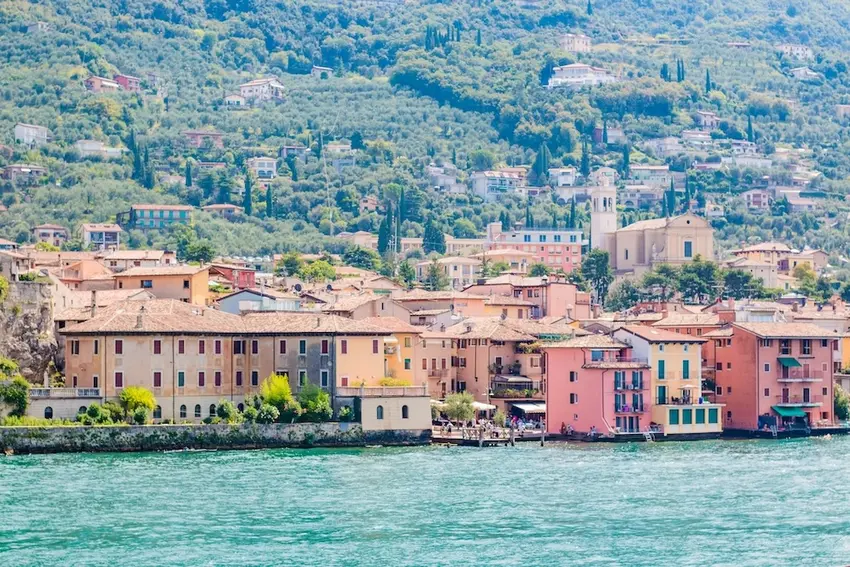
Italy celebrates its most beautiful small villages (borghi) every year with an annual ranking called I Borghi più belli d'Italia ('the most beautiful villages in Italy').
Seven villages have been added to the prestigious listing in 2026.
The 'Borghi Più Belli d’Italia' association is a non-profit founded in 2002 to recognize the best of ‘hidden Italy’ – small, lesser-known towns rich in cultural, gastronomic, environmental and artistic heritage.
The list includes hundreds of villages organized by region, plus detailed information on what to do, where (and what) to eat, and where to stay in each borgo. Many people use it for inspiration for weekend escapes.
Five villages will be permanent additions to the list, while two received a ‘guest’ designation: a temporary, two-year appointment, due to their populations exceeding the 15,000 cut-off to qualify.
Here’s a bit more about the newly added borghi:
Limone sul Garda – Lombardy
Perhaps the best known among the new additions, the lakeside resort town of Limone sul Garda is, as its name gives away, on Lake Garda.
As you might have also guessed from the town’s name, it’s famous for its lemon groves. The town is a haven for citrus, a rarity in the north. The most famous place to see these prized fruits is the Limonaia del Castèl (‘the lemon house’), a terraced garden of lemon groves overlooking the lake.
A newer attraction in the town is the Ciclopedonale, a cliff-hugging pedestrian and biking path that connects Limone sul Garda to Trentino.
Pieve di Teco – Liguria
This hill town in the Arroscia valley, in the western part of Liguria bordering Piedmont, is the latest in a series of similar villages to be added to the list.
The medieval village of Pieve di Teco gets its name from its church, the Church of the Madonna della Ripa in Pieve di Teco. It’s known for its stunning porticoes built in the 15th century, which are still occupied by merchants and sellers today, as they would have been then.
The town still reflects its diverse history of rulers, from the Lombards to the French, but most notably, the Savoys.
Castelvetro di Modena – Emilia-Romagna
Just outside Modena, this hamlet is best known for its wine – specifically, a ruby red called Lambrusco Grasparossa di Castelvetro POD. It’s used in the making of Modena’s beloved product, balsamic vinegar.
The best time to visit Castelvetro is during the week-long wine festival in the fall. The annual Sagra dell'Uva e del Lambrusco Grasparossa (Grape and Lambrusco Wine Festival) is held every September.
Aside from the foamy Lambrusco, Castelvetro is also cherished for its architecture. Its skyline is easily recognizable for its six medieval towers.
Cusano Mutri – Campania
This village with ancient roots straddles the border of Campania and Molise in the rugged, forested hills of the Matese Regional Park.
The medieval castle that was once the centre of Cusano Mutri no longer exists, though its ruins can still be seen in Piazza Lago.
The town itself is very much alive today, playing host to several annual events, such as an elaborate infiorita every June and a mushroom sagra in autumn.
Rivello – Basilicata
A ‘hilltown’ spread rather across three hilltops, the Basilicata village of Rivello forms a striking landscape of red terracotta roofs contrasted by the lush green of the southern Apennines.
Aside from its scenic location in the Lucano Apennine National Park, Rivello is also steeped in history and arts. Throughout its ancient history, it has been a religiously significant town for everyone from the Byzantines to the Greeks – creating quite a mosaic of architecture – and a centre for copper and gold mining.
Highlights include the many and diverse churches, especially the 16th-century Franciscan Monastery of Sant'Antonio and its extensive frescoes and the medieval churches of San Nicola di Bari and Santa Maria del Poggio.
Biella, Borgo il Piazzo – Piedmont ('Guest Village')
Boasting medieval villages, dramatic castles, picturesque mountains and even a Unesco World Heritage Site – the Sacro Monte di Oropa sanctuary – Biella flies under the radar as a Piedmont destination.
Food and wine lovers will be in heaven anywhere in the region, but Bieta’s proud food tradition and acclaimed restaurants really stand out. And while Barolo-producing areas like the Langhe are well known, this area has its own wines, like Gattinara, that we think are every bit as interesting.
Borgo il Piazzo – the part of Biella being recognized as a ‘guest village’ – is the oldest part of the town of Biella. Founded in the 12th century, the hilltop hamlet became home to nobility, and their grand residences remain today, such as Lamarmora Palace. The old village is reachable from the lower part of the town by a funicular.
Termoli, Borgo Vecchio – Molise ('Guest Village')
Most widely known as a favourited beach resort in Molise, Termoli actually has a medieval heart, which is being recognized as a two-year ‘guest’ village by I Borghi più belli d'Italia.
The Borgo Vecchio (old town) of Termoli, on the Adriatic coast, was once a hub for fishing. It has an ancient walled centro storico with pastel-colored houses and some of Italy’s narrowest alleys, with views of the traditional trabocchi – old fishermen's wooden huts – suspended above the water. But the main symbol of the village is the medieval Swabian Castle (Castello svevo), built by Frederick II, a Holy Roman Emperor, in the 13th century.
This would be a good borgo to check out in summer. The sandy hideaways around the region's picturesque coastal town of Termoli are as good as those offered by other Italian regions but are much less of a tourist trap. The southern Adriatic coast is considered to be one of Italy's most beautiful stretches of coastline – and Molise boasts its own 35-kilometre stretch.
Comments (2)