
After jet fuel shortages at Italian airports early this week, there are concerns that Italy could soon be hit by an energy crisis if disruption to fuel supplies continues.
Italy is more reliant on imports of gas and other fuels than most EU countries, putting it at higher risk of shortages.
The government is now drawing up a contingency plan reportedly limiting air conditioning use, restricting car use to alternate days, and enforcing mandatory remote work for public sector staff if the situation continues beyond April.
READ ALSO: Fuel restrictions spread to more Italian airports amid Middle East supply fears
Defence minister Guido Crosetto told Corriere della Sera on Tuesday there was a "real risk" that "not everything, but a lot" could grind to a halt within a month if the Strait of Hormuz remained blocked beyond this month.
The government is working from a list of demand-reduction measures recommended by the International Energy Agency, though nothing has yet been confirmed.
Here's a closer look at what the emergency plan is, and isn't, expected to contain.
Air conditioning and heating limits. Offices and public buildings could face mandatory temperature limits. These would see air conditioning set no lower than 27–28 degrees in summer, heating no higher than 19 degrees in winter, along with restrictions on hours of use, according to Sky TG24.
There is of course no way to enforce heating or air conditioning restrictions in private homes, though the government is likely to ask residents to consider their usage - or higher prices may make it necessary.
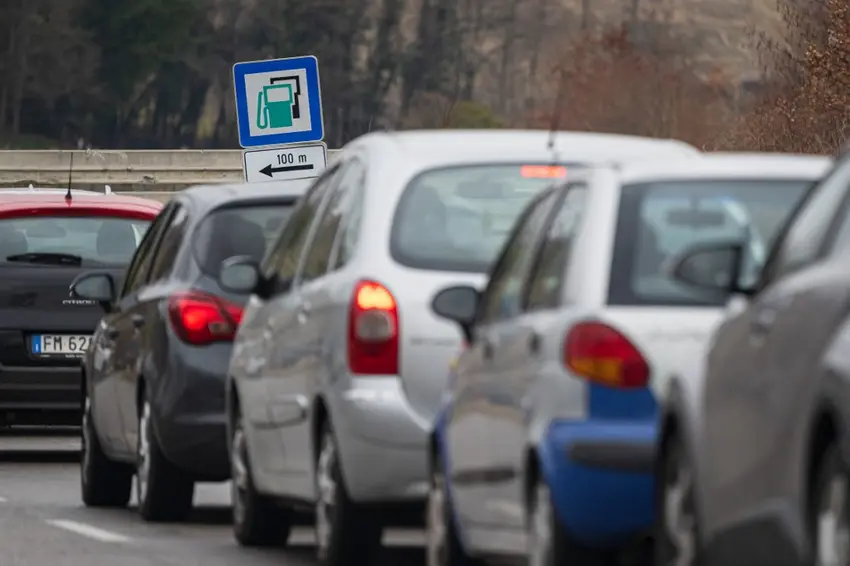
Alternate-plate driving restrictions. Italy has used targhe alterne — a system restricting car use on alternate days based on whether a number plate ends in an odd or even number — during previous energy crises, such as in 2022. This is one of the options now being evaluated, according to news reports.
Mandatory remote working. The government is considering extending remote working in the public sector and encouraging it in the private sector to reduce commuting and fuel use. Around 555,000 public sector workers (some 17 percent) already work remotely.
Reduced public lighting. Cuts to lighting on public buildings, monuments and public spaces are also under consideration, according to Sky TG24.
Coal and renewables. To reduce Italy's dependence on gas for electricity generation, the government is looking at maximising production from coal-fired power stations - after it already said the planned phase-out of coal power would now be delayed by over a decade. It is also considering fast-tracking permits for renewable energy.
Remote schooling?
While some Italian news reports have suggested that the government may close schools to save power, leading to headlines about "lockdown" measures, this appears very unlikely to happen.
Teachers' union Anief called for a return to distance learning for the final month of the school year, arguing it would be a natural consequence of wider energy-saving measures. However the government has not backed the idea, according to Sky TG24.
Schools and hospitals are described in the government's contingency planning as protected sectors that should remain fully operational, according to reports.
Fuel rationing and full traffic bans are also last-resort options only.
When could this happen?
May is the critical month, when gas flows are expected to slow as existing supply contracts run down.
Prime Minister Giorgia Meloni was expected to address parliament on the situation later this week.
Crosetto said Italy's options were "inevitably limited" without coordinated EU action.
The European Commission has written to all member states urging them to prepare for a potentially prolonged disruption, and is expected to present its own package of recommended measures soon.
Comments (2)