
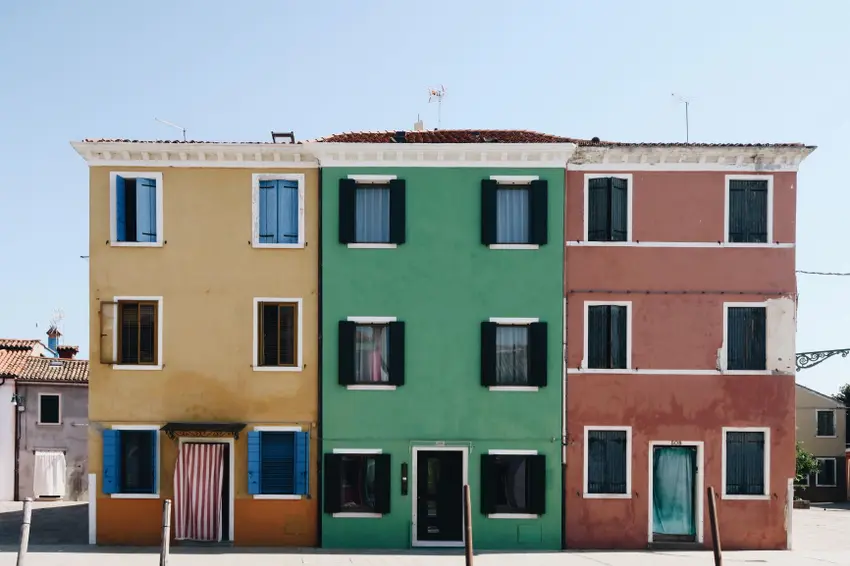
Waking up in your own cosy Italian apartment, opening the shutters and stepping out onto a sunny balcony as you look out over the old town below. Sounds nice, doesn't it? And renting is a relatively quick way to make it a reality.
Whether you're planning to stay in Italy short-term, want more flexibility, or just need time to scout out the perfect forever home to buy, renting an apartment might be the right solution when you make your move.
But, Italy being Italy, the rental market too has its peculiarities.
Whether or not you experience problems will depend on your situation, including your budget, and the part of Italy you're in. And of course, on the landlord and agency you're dealing with.
But whether you encounter issues that become dealbreakers or simply make you raise an eyebrow, you certainly won't be alone in asking "wait, is this normal here?"
Think twice about those beautiful old buildings
Chances are there will be some unique apartments listed in stunning centuries-old palazzi even at lower price points.
It can be hard to resist the appeal of living in a historic building, with unique architecture and bags of charm. Isn't that what we all loved about Italy to begin with?
It won't be a surprise though to hear that they may not exactly be a practical choice.
Poor insulation, strange layouts and ancient plumbing are par for the course. Many such buildings won't have an elevator, and those beautiful period windows won't keep out much of the street noise.
More modern blocks from the 50s and 60s often have better layouts and more outside space, but the heating may be centrally controlled and sound insulation almost nonexistant.
Once you've viewed (or lived in) a few such homes, you'll understand why so many Italians want a brand new apartment on the outskirts of town - preferably with a storage cellar (ripostiglio) and garage (box auto).
If you're truly set on living in an atmospheric older building though, we're not here to rain on your parade.
There are rare, recently-renovated and comfortable rental apartments available inside historic buildings, but be ready to raise your budget and act fast when you find one.
Furnished or unfurnished?
You may find these terms mean something slightly different in Italy than what you're used to back home.
In Italy, “unfurnished” usually means the place is totally empty. That means there won't even be light fixtures or a kitchen (not just missing appliances – no worktops, cupboards, sink. Nothing.)
The apartment will contain nothing at all apart from the sanitari (toilet and bidet) and perhaps a bathroom sink unit.
READ ALSO: Eight things landlords in Italy can never ask of tenants
A part-furnished apartment should have a kitchen in it, probably without appliances, and might even come with a few pieces of the owner's grandparents' old furniture. It's very unlikely to have a bed or sofa.
Most long-term rentals come unfurnished or partly-furnished.
Short term rentals (a year or less) however will most likely have all, or most, of the furniture you might need. Some of them are even quite stylish. These are more commonly found in big cities and tend to be aimed at students and young professionals.
Pet-friendly?
In some countries, like the UK for example, it can be near impossible to find a rental that will allow pets. In Italy, this doesn't tend to be as much of a problem.
This may be partly because few rental apartments have been recently renovated, so there aren't as many shiny new finishes to damage. But you'll probably also notice that, for better or worse, in Italy it's not unusual for people to keep pets in small apartments, including large dogs.
The rules on this vary from place to place, building to building, and contract to contract.
While owners of apartments have a legal right to keep pets in their property, that right does not extend to tenants - meaning the final say will be down to your landlord.
If your rental contract does include a 'no pets' clause, you may want to ask your landlord about it anyway. There's a good chance that many landlords will be using a template contract they just found online, and that they might not actually mind pets at all. (Particularly if you introduce them to your four-legged friend and demonstrate what a good boy or girl he or she is.)
How much is all this going to cost?
As with anywhere, rents vary greatly in Italy depending on where you want to live, and the average monthly rent on an apartment in an Italian city is rising all the time.
Very broadly speaking, an average monthly rent for a one-bedroom apartment can be well over 1,000 euros per month in the most expensive central areas, and as low as around 400 euros a month in small towns.
Many landlords ask for the first month's rent upfront plus at least one month's rent as a security deposit. Many will ask for two or even three months, but you may be able to negotiate that down.
READ ALSO: The rental scam problem in Italy is real, but they're not always hard to spot
And don't forget that the letting agents' fee is generally a month's rent – and then you'll have to pay a whopping 22 percent tax on that fee, as well.
Overall, you'll need to budget for over three months' rent just to move in. And of course, that's before factoring in the cost of furniture, moving, and setting up utilities.
And if your apartment is part of a condominio - which can be an apartment building or any kind of multiple-occupancy housing unit - remember you'll also need to pay fees, known as spese condominiali, for the upkeep of communal areas.
This charge may cover everything from lighting to cleaning and rubbish collection, and will vary depending on the size, type and location of a property.
The typical fee applied in a small city-centre apartment block is usually around 20-50 euros a month, and the charge may also be payable quarterly or annually.
A lettings agent is probably a good idea
In Italy most apartments are rented out by private individuals, rather than investors or the "buy to let" landlords you find so many of in countries like the UK.
This can be a good thing in many ways, but it also means these landlords are often inexperienced, for example when it comes to legal issues, or are too busy to deal with any problems you may have.
Most private owners choose to work with an agent, which means you'll have the easiest time and the biggest pick of apartments if you go to an agency.
While agencies charge fees, good ones are useful to have around.
Not only will a good agent advise the owner on regulations and make sure the property is compliant, but they can negotiate with the owner on your behalf.
Of course, you may have luck finding an apartment through word of mouth that you can rent directly from the owner, or perhaps on online portals - though more often than not you'll still have to rent via the agency, even if you've done all the searching yourself.
With the prevalance of rental scams in Italian cities, we'd advice extreme caution if you're looking at rentals listed on social media.
You really can - and should - negotiate
The very idea of it might make people from some countries cringe, but you are expected to haggle with your Italian landlord over the price.
Italian landlords and agents almost all initially ask for more than is realistic or reasonable because they expect negotiation.
But if you're not Italian, a lettings agent or a local friend will have better luck negotiating than you will.
Even if you speak fluent Italian and have no qualms about haggling, you could still come up against the unfortunately all-too-common assumption that foreigners moving to Italy must have deep pockets, or more money than sense.
You don't want to hurt any egos by offering an insultingly low price. As a general rule, most asking prices are trattabile by around 10-15 percent.
If you're looking at apartments in "desirable" central areas of popular cities, or if you're after one of those renovated period apartments we mentioned earlier, you'll have less bargaining power.
Know your contracts
Some people might tell you that there's no need to bother with a contract, and that it's “normal” for people to rent without contracts in Italy. Our advice is to steer well clear of anything like this.
While it's not unknown for Italians to have these informal arrangements, perhaps when renting from friends, it's essential as a non-Italian that you have everything done officially – not least as you'll need to provide a copy of your rental contract when applying for Italian residency.
READ ALSO: What you need to know about navigating Italian rental contracts
If you drive, you'll also need it to obtain a residents' parking permit, and this is especially important if you're within a limited traffic zone.
There are a few different types of rental contract available in Italy. You'll probably want a residential (uso abitativo) contract, which can have a duration of 3+2 years (meaning the contract is valid for three years with the option to renew for another two), 4+2, 4+4, or even longer.
There's also the option of transitory (uso transitorio) with a duration of one to 18 months, and student rentals (uso studenti universitari) with a duration of between six and 36 months.
The terms and conditions for each type vary, and you should of course check the contract carefully with your agent.
Once you've signed your rental contract, your landlord or the agency has 30 days to register it officially with the local authorities.
They will then need to give you a copy of this legally registered, stamped contract, which is what you'll use for your paperwork.
And you might not be thinking about this while moving into a new place, but make sure to check the terms and conditions on giving notice to leave the apartment.
Many contracts will stipulate that you need to give at least three months' notice to your landlord if you move out, which can come as an unpleasant surprise. You might be able to negotiate that down before signing.
The most important thing is to know what the contract says, and to have it to hand when it comes time to leave. Just in case your landlord is anything like the ones we've encountered, and tries to tell you that the period is actually six months...
You'll need to set up utilities in your name
In some countries, tenants usually pay a set fee to the landlord every month to cover utilities such as water, electricity, and even wifi. Not so in Italy, and you'll usually need to have all these bills sent directly to you.
This may be as simple as having the electric and water companies change your landlord's details for yours on the system.
But if the apartment isn't already set up with utilities, you'll need to set up accounts with the various utility companies yourself.
Just a few short years ago, this had to be done in person at their offices, but mercifully it can be done (at least mostly) online now.
Cleaning supplies should be your first purchase
Surprisingly in a country famed for being obsessed with cleanliness, it's not uncommon to hear tales of Italian landlords leaving their apartments filthy.
You might not have noticed quite how thick the dust was when you visited the property, or maybe the landlord had strategically placed a plant pot over a stain or two. But be prepared to do some deep-cleaning and decorating when you move in.
If you're lucky, your landlord will have freshly repainted the place, but don't count on it. So you may want to factor in the cost of a few tins of paint into your budget.
Any minor repairs needed will also be yours to take care of. The owner may at least cover the cost of any hardware you need to buy.
Getting to know your neighbours
It's always nice to know the neighbours, but in Italy it's essential.
In fact, it is worth trying to meet a neighbour or two before you even decide whether to take the apartment. They might warn you about hidden problems with the building, put in a good word for you with the landlord, or even invite you to Sunday lunch once you've moved in.
In any case, you may as well get on good terms with them as soon as possible .If you're used to apartment living being anonymous and private, you can forget about it here. Your neighbours are soon going to know all of your business - and not just because your dividing walls are paper thin.
Even in big Italian cities, there's often a sense of community in apartment buildings and all of the neighbours do tend to know one another.
There's a good chance your neighbours are looking out for the safety of the building and everyone in it, and won't hesitate to lend you a hand, take your parcel deliveries, and be openly curious about your habits and every visitor you have. If you're lucky, they'll occasionally bring you baked goods.
Whether you find this neighbourly relationship claustrophobic or reassuring entirely depends on you.

Comments (5)