
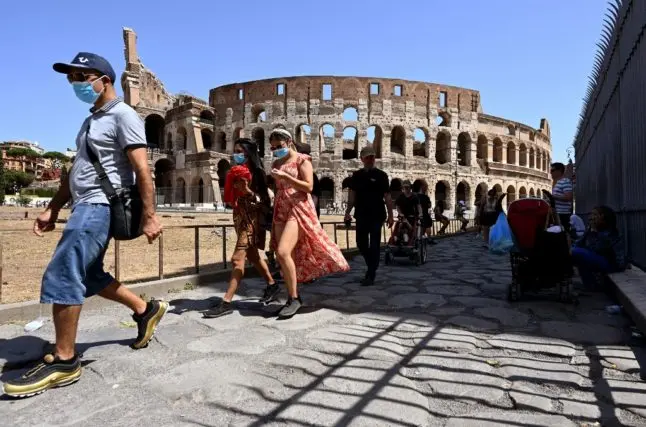
Italy is a beautiful country, loved by tourists who returned this summer after the pandemic had pressed pause on global travel.
But the art, the churches, the monuments, the beaches and the food aren’t enough to keep the industry going in the long run if not supported by a strong marketing strategy - particularly in the post-pandemic world.
Italians have a saying: “Campare di rendita” - meaning ‘to live off the assets one already has without doing any extra work’. Like an aristocrat who survives on his family’s money without lifting a finger (until the day he realizes it’s all gone), Italy’s rich heritage requires a modern, efficient communication campaign to sustain it.
Many foreigners I have spoken to complain they can’t find much help at local tourist offices, particularly in smaller towns and rural areas. Tourist information is often poor, outdated and consists of sketchy handouts and pamphlets only in Italian. What’s provided isn’t appealing: a list of fairs, religious parades, endless churches, museums and archaeological sites.
READ ALSO: Why Italy urgently needs to hike entry prices to monuments and make people pay to visit churches
To lure curious visitors you need to feed them intriguing stories and blend the past with the present through legends, outdoor activities, interesting guided tours and experiences. Meeting locals who have a story to share or are doing something fantastic for the local community makes it all the more exciting: the Neapolitan pastry chef who makes the largest sfogliatella, a chili-pepper eating marathon in Calabria, the salami battle between neighboring towns, or Milan’s ‘mad hatter’ who designs tailored hats.
I tend not to join guided tours because when I do I always end up wandering off. The last time was in Sicily, inside a stunning, spooky old fortress where it is said a princess was walled in alive in one of the turrets and the ghost of a knight in shining armor attempts to rescue her every fortnight. I just felt like strangling the guide. She made us stand for 1.5 hours under the scorching sun, without walking, just to listen to her narration of the historical facts and dates. It was boring.
All this reflects on travel journalism. The media can be a powerful tool in promoting destinations and yet such potential is not always grasped.
As a reporter when I need to source photos and turn to tourist boards they either have none or send black and white ones dating back to the 1960’s, or shots of a corner of an alley. Let alone high-res photos. Irritated, my question to them is always the same: ‘how can you promote the beauty and plus points of your territory if you have no alluring images to show people?’. Silence follows.
Tourism marketing should be sexed up, but I think this is still not seen as a priority because tourists will come anyway to Italy to enjoy the views and wonders. And everyone knows it.
MORE OPINION:
- Want to eat well in Italy? Here’s why you should ditch the cities
- How tourism could help save Italy’s coastline instead of destroying it
- Bargain homes and fewer crowds – but Italy’s deep south is not for everyone
However, more dynamic and tailored campaigns focused on sustainability, green lifestyles and off-beat destinations could affect the type of incoming tourism by raising the quality and making it more niche.
Italy’s post-Covid recovery plan has earmarked roughly 2.4 billion euros to revamp the sector, partly by boosting digital services through the creation of a new online platform.
Investments will also be made to support rural communities, upgrade accommodation, create new itineraries, hire new ‘professionals’ (perhaps in communication?) and promote under-the-radar, alternative destinations that offer a slow-pace experience.
How all this will translate into concrete measures is still unclear.
The goal is to boost eco-conscious tourism and change the way Italy is perceived globally - not just as the cradle of art and history but also as an innovative, high-tech destination with modern, green infrastructure.
READ ALSO:
- Fast trains and building bonuses: How Italy plans to use the EU recovery fund
- Italy has a big chance to improve internet speeds – but will it take it?
In a post-Covid world, mass tourism will no longer be the norm while remote, idyllic spots are bound to lure travelers looking for a knowledge jolt and fewer crowds.
The rebirth of rural Italy will be at the core of the tourism revamp - provided the funds are efficiently deployed.
But first, the way Italy thinks about tourism and the way it is promoted must change. The fact that Italians have adopted an English word - ‘marketing’ - just shows how such strategic skills have never quite been their forte.
A couple of years ago the British Museum made global headlines by organizing a fabulous exhibition on the wonders of Pompeii in London, while back in Italy the archaeological site just kept falling to pieces. One could argue that it would have been preposterous to stage an interactive show amid the ruins given Pompeii is a UNESCO-listed World Heritage site. But at the end of the day the UK basked in the reflected glory of an asset held in Italy.
Italy’s problem is that it has been naturally gifted with too much beauty and art, and thinks that, just because it is Italy, it needs no advertising.
Marketing campaigns are not seen as important, and when they are launched there’s often nothing new, sexy or surprising about them
I hate to be pessimistic but I think that without a ‘cultural revolution’ changing the messaging around tourism, and the approach towards territorial marketing, the recovery fund won’t be able to work miracles.
Comments (4)