
These days, taking a flight to a foreign locale feels like a guilty pleasure – and not a very pleasant one. Airports are crowded, tickets are expensive, and for many flying now comes with a healthy dose of guilt over the tonnes of carbon emissions emitted by every flight. Isn’t there a better way?
Well, for the first time in decades, several of Europe’s train operators are willing to bet that more travellers will opt for a slower, more romantic, and more comfortable trip on board a night train.
And thanks to government subsidies here and in neighbouring Austria, Italy has emerged as one of the leading destinations for night train travel.
But as anyone who has tried to book a night train knows, travelling this way can be pricey and logistically challenging. And that’s to say nothing of the limitations of life onboard.
So in the end, are Italy’s night trains really worth it?
Subject to availability
The first thing to note is: if you hope to make a night train part of your vacation, you may need to plan around a fairly limited schedule.
The last decade has seen overnight train operations pared back across Europe, with dozens of night train routes cancelled in key connecting countries like Germany, France, and Spain.
That’s left just three providers offering regular night train service in and out of Italy: national railway Trenitalia, Austria’s ÖBB, and private start-up European Sleeper.
READ ALSO: Where in Europe can you visit by train from Italy in 2025?
Trenitalia’s IntercityNotte service operates the best connections, with 24 daily trains going along each coast from north to south and vice versa.
In the north, these lines start in Turin, Milan, or Trieste, and run all the way to Lecce and Reggio Calabria in the south. Some routes even continue on to Sicily – and on weekends, extra night trains leave Rome for Lecce in the south and Bolzano in the north, way up in the Alps.
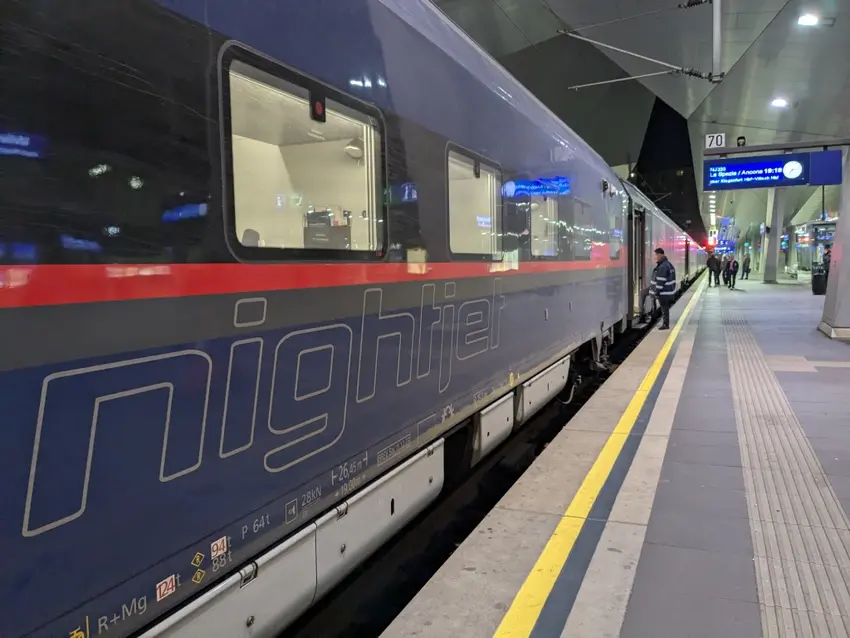
Other providers offer more limited connections. ÖBB’s NightJet service operates a daily route from La Spezia to Vienna, via Milan and Padova; another from Rome to Vienna via Florence and Bologna; and a third from Florence to Vienna via Udine.
European Sleeper has the most limited offering: just one route from Venice north, through Innsbruck, Munich, Cologne, and Brussels. At this point, it’s running just a few days a week.
(For those planning a more deluxe vacation, there is also the “cruise-on-rails” Venice-Simplon-Orient Express, which can take you to Amsterdam, Brussels or Paris – with rooms starting at more than €4,000 per person.)
The real trick with all these lines is to book well in advance. While Trenitalia’s trains can often still be booked on relatively short notice, the newer generation ÖBB NightJet trains and European Sleeper routes can book up months in advance. So make sure your dates are available – and not too pricey – before planning your travel around them.
Booking connections into France, Germany, or other European networks can also be complicated. National train booking systems still function largely in isolation, meaning that to find the best rate you’ll usually need to book any onward journeys separately, on national operators’ websites.
Choose your class
Operators like ÖBB and Trenitalia work hard to keep ticket prices on night trains low, even operating many routes at a loss – but it doesn’t mean these seats are cheap.
While single seats can be purchased for less than €100 on some routes, it’s hardly the full night train experience – though you can at least expect somewhere safe to put your luggage.
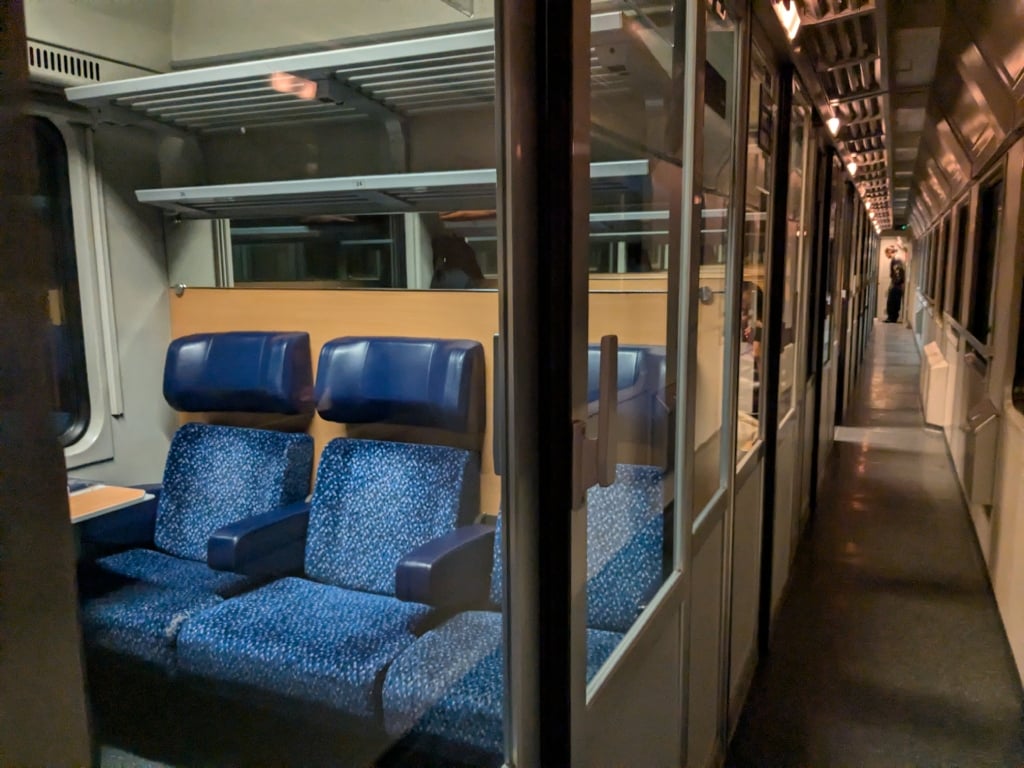
More common are couchettes – bunk-like compartments shared between four and six passengers. When full, these can get very cramped, with limited luggage space onboard. You usually get a welcome kit and some breakfast included in your ticket, but be warned: bringing earplugs is advised!
Alternatively, if you don’t want to travel with strangers, ÖBB also offers the option to book a full couchette if you are travelling as a couple or a small group.
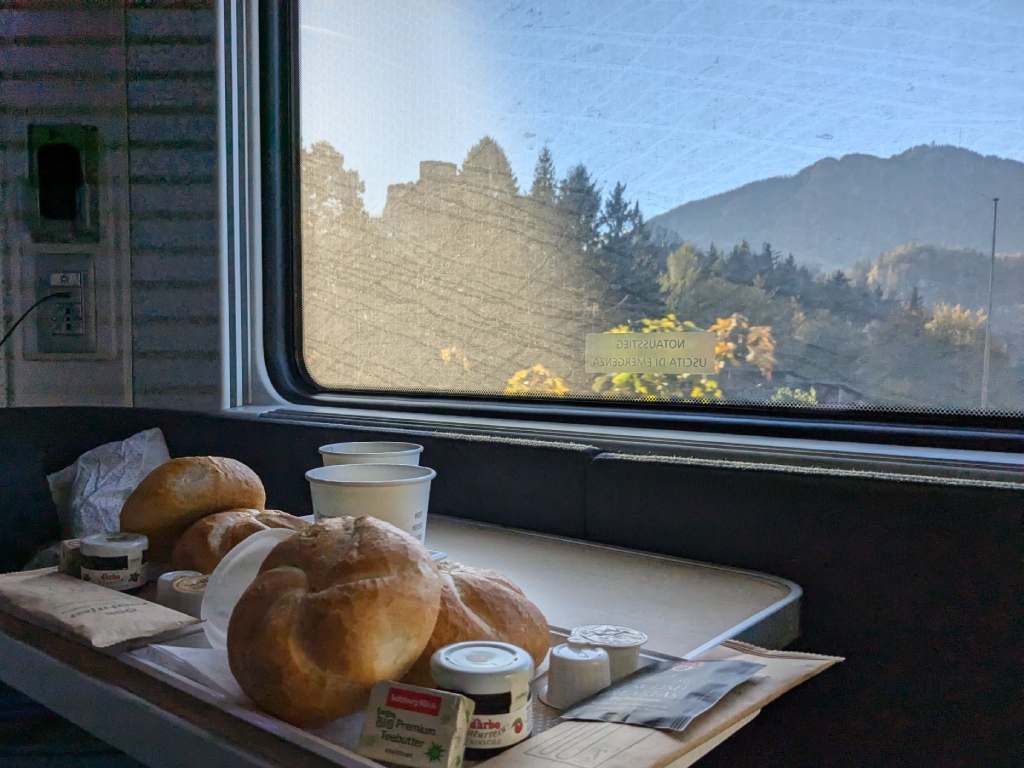
If you’d like the full experience, you can book a full sleeper compartment with one, two or three beds. Like a couchette, these tickets usually include breakfast and a welcome kit, and some rooms even include a shower (of sorts – usually, it will operate only a few seconds at a time).
READ ALSO: Five clever ways to save money on train tickets in Italy
These compartments can cost upward of €300 for a single journey – more than three times what a discount airline on the same route might cost. But you will get far more privacy and more space for you and your luggage to spread out.
To offer travellers an alternative low-cost option, ÖBB has also rolled out new carriages with “mini-cabins” – capsule-style private beds with locking luggage space, tray tables and windows. If you are able to find one of the few trains that have them – usually on ÖBB’s Rome to Vienna route – they are an affordable way to take a night train without sharing with strangers.
It’s worth noting that with the exception of some limited routes (including Trenitalia’s new treno turistico, the Sicilia Express), night train operators have largely phased out dining cars. That means bringing your own snacks, or ordering microwaved room service meals at a premium.
The verdict
I was lucky enough to take one of ÖBB’s next-generation trains to Vienna recently, and I must say that the furnishings and amenities in both the couchette cars and sleeper suites were top notch.
While the beds were still (extremely) firm, I didn’t find it hard to get to sleep – though you should expect some rocking and rolling on any transalpine route.
Overall, the train felt like a futuristic mini-hotel – especially compared to the far more common, decades-old couchette carriages in use on many lines.
These new trains will only become more common as night train operators slowly update rolling stock that in some cases has not been refurbished in decades. With profit margins so slim though, it will likely take a while.
In the meantime, night trains still only really make sense if a number of factors converge as you’re planning your trip.
Are you interested in train travel or conscious of your carbon emissions? If so, night trains are a no-brainer. While they’re still more expensive than discount airlines, one trip can save hundreds of kilograms of CO2 you would burn by flying.
But among my fellow passengers, the most common reason I heard for taking the night train was the time saved.
For time-crunched tourists, taking a night train can save you a hotel and give you an extra half day, at least, at your destination.
And for anyone sick of commuting to or waiting in an airport, night trains offer a totally different way of travelling – more comfortable, more relaxed, and with less time waiting to start your journey.
All to say, paradoxically, travelling slow may be the faster way to arrive. Just make sure to pack your earplugs.
Comments