
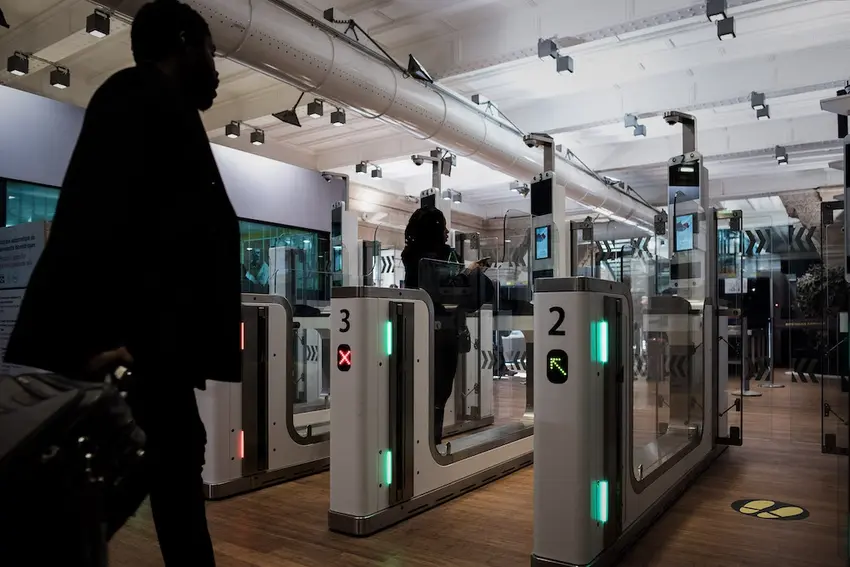
They've been in the planning for years and postponed several times due to concerns about readiness, but the EU's two big travel changes are now due to come into effect between late 2025 and 2026.
The Entry & Exit System (EES) is due to launch on October 12th, 2025, followed by the European Travel Authorisation and Information System (ETIAS) in the fourth quarter of 2026 – both with a six-month phased rollout.
Here’s a breakdown of what the systems are and how they will apply to you.
What are EES and ETIAS?
The EES is an enhanced biometric passport check designed to replace manual passport stamping.
The system will only be used on the Schengen area's external borders – so you won’t encounter it for travel between Italy and Germany, for example, but you will if you fly into Italy from the US.
When non-EU travellers first enter the Schengen area, they will need to register with the EES by sharing their name, biometric data (fingerprints and facial scans) and the date and place of entry and exit.
Once this is done, you won’t need to register again for another three years (or until you get a new passport).
READ ALSO: EES: Two major Italian airports reveal start date for new passport checks
To avoid major delays at checkpoints when the system first launches, the EU’s border agency Frontex has created the Travel to Europe app.
This will allow passengers to ‘pre-register’ their document details and facial image and fill out an entry questionnaire at least 72 hours before travelling.
The ETIAS is an online visa waiver required for tourists and other visitors to the EU/Schengen zone, similar to the US’s ESTA.
The EU’s current proposed fee is €20, up from an original €7.
The application process will be entirely online. Applications should be processed within minutes, but travellers are advised to apply 72 hours in advance in case of delays.
You can read more about how both systems will work here.
Because the EES and ETIAS are primarily aimed at digitising enforcement of the EU’s ‘90-day rule’, which limits visitors to stays of 90 days within a 180-day period, it can be hard to find information on how the systems will apply to those who have a visa or residency permit in an EU/Schengen zone country.
READ ALSO: EXPLAINED: What happens if you overstay your 90-day limit in Italy?
Here’s some of the essential information you need to know.
EES
I'm not an EU citizen, but I'm a resident of an EU country: do I need to complete EES pre-registration?
This is the key question for readers of The Local, many of whom are non-EU citizens who live in an EU/Schengen zone country with a residency permit.
People in this situation do not have to complete EES pre-registration or provide biometrics – the reason being that a primary function of the system is to better monitor the 90-day rule, which residents are not subject to.
While it is clear that residents will not be covered by the EES, exactly how this will work at an airport, station or port remains frustratingly unclear, with non-EU citizens resident in EU countries told only to not use automated passport gates and try to find a manned booth where you can show both your passport and visa/residency permit.
I have a visa: does this apply to me?
If you hold any kind of visa other than a short-stay Schengen visa, you’re not required to complete EES pre-registration.
People on a short-stay Schengen visa, however, do need to complete EES pre-registration.
Citizens of some non-EU countries, including the UK, US, Canada and Australia, benefit from up to 90 days of visa-free travel into the EU/Schengen zone every six months.
People in this situation also need to complete EES pre-registration when entering the Schengen area for visits of less than 90 days without a visa.
I'm a second home owner, what about me?
It depends on whether or not you have a visa, as owning property does not in itself give you any particular rights in the country where your property is located.
Long-stay visa-holders and those with residency permits are not required to complete EES pre-registration, but anyone entering on a short-stay Schengen visa or without a visa (under the 90-day rule) is required to do so.
I'm a citizen of an EU, EEA or Schengen zone country.
You are exempt from EES requirements.
I'm a dual national, holding the passports of both an EU and non-EU country.
It depends on the passport you are travelling on. Those travelling on their non-EU passports will need to register with EES, while those travelling on their EU passports won't.
It’s important to note that the EES website and the Travel to Europe app are not actually up and running yet, so we don't know exactly how the online pre-registration process will work.
The rules outlined above are how the system is supposed to work in theory; hopefully, the EES will avoid the fiasco of the UK's ETA system, which in effect bars British dual nationals from travelling on a non-UK passport.
How much does it cost?
There is no fee for the EES – it's the ETIAS that has a cost.
How do I prepare for this?
Assuming you're not in one of the exempt groups, you will need to complete EES registration the first time you cross an external Schengen border once the system is up and running.
At the time of writing, the EES is set to launch on October 12th, 2025, but will roll out at different EU checkpoints over a six-month period – so if you’re travelling to and from the EU in late 2025 or early 2026, you might not face EES requirements.
Once the Travel to Europe app is available to members of the public, you will be able to pre-register your details and facial scan at least 72 hours before travelling in order to speed up the process at the border checkpoint.
ETIAS
The rollout of the EES will be followed by the launch of the ETIAS visa waiver.
Its anticipated start date is between October and December 2026, but it won't be introduced until the EES is fully up and running.
This is different in format to the EES – it requires travellers to go online in advance of their trip, fill out a form and pay a fee in order to receive the ETIAS travel authorisation.
Once purchased, this will last three years (or until you get a new passport), covering multiple trips to the EU/Schengen zone.
I'm a resident of an EU/Schengen country, am I exempt?
Yes.
The ETIAS visa waiver is mostly aimed at tourists and visitors; non-EU citizens who live in an EU, EEA or Schengen zone country with a visa or residency permit are exempt.
Simply show your passport and visa/residency permit at the border, just as you do now.
I have a Schengen visa, am I exempt?
If you’re a national of a country that does not benefit from the 90-day rule for visa-free travel, you will need a short-stay Schengen visa in order to enter the bloc.
Because you have a visa, you are exempt from ETIAS requirements. The same applies to all other long-term visa holders.
I'm a second-home owner, am I exempt?
It depends on whether you have a visa or not.
Visa-holders are exempt, whereas people travelling without a visa under the 90-day rule are not.
I'm only making a weekend trip, am I exempt?
No, this is required for all tourists and visitors to the Schengen zone travelling without a visa, even if they are only making a short trip.
I'm a pensioner. Am I exempt?
If you are over the age of 70 or under the age of 18 you’re not exempt from the requirement for an ETIAS visa waiver, but you are exempt from the fee.
Simply fill out the online form and, once you have entered your date of birth, the form will skip the payment section.
Can I apply now?
No. The ETIAS website is not yet up and running. It is expected to go live a couple of months before the start date.
Any website currently claiming to process ETIAS applications or offering to help you with them is a scam.
Is this a phased introduction too?
Yes, albeit in a slightly different way to the EES.
Once the ETIAS system is introduced, you will still be allowed into the EU without one for the first six months – during this period, those travelling without a visa waiver will be informed of the new requirements, but won't be blocked from entering the EU.
Only after spring 2027 (unless there are further delays) will people start to be turned back at the border if they don't have an ETIAS.
Comments (17)