
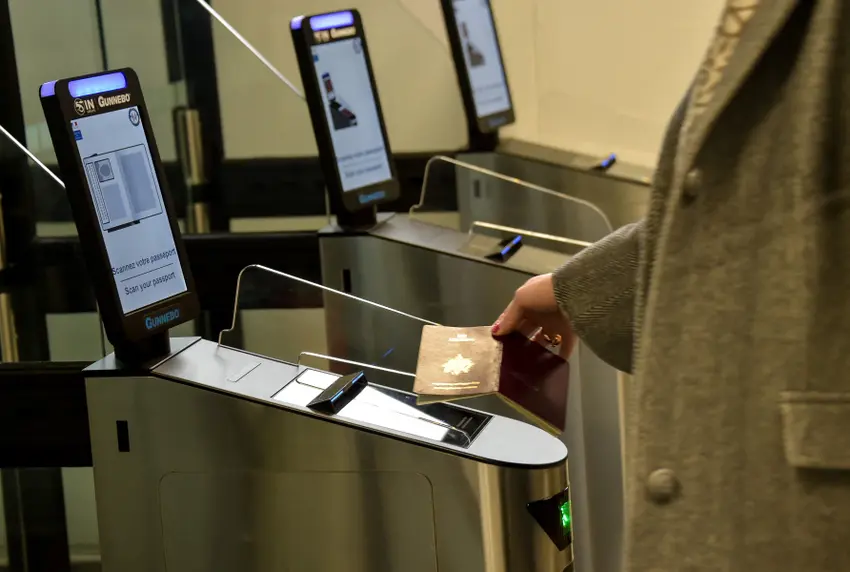
The EU's Entry & Exit System is a new way of checking passports at the Schengen zone's external borders, and it's due to come into effect from October 12th. Full details on what it is and how it works here.
The system has a phased approach, with entry ports gradually rolling it out from the middle of October. The current target is to have it fully up and running for all passengers by spring 2026.
The first airports to use the system will be Rome Fiumicino and Milan Malpensa from October 12th.
Palermo and Genoa’s airports have said they will activate the new system on October 20th, and Italy's state police have
since said the system will come into force from the same date at all other entry points.
Passengers have been warned to expect some delays as the scheme is phased in over the coming months. In some airports, separate EES lanes will be introduced to manage queues.
READ ALSO: What to know about the start of EES passport checks at Italian airports
Not everyone is required to complete the EES registration - you can find the full list of exemptions here. But the main groups who won't need it are EU citizens, and non-EU citizens who are legally resident in an EU country.
For non-EU citizens resident in Italy, it isn't always clear what exactly you'll need to do when arriving at an Italian port or airport. Here's the information we have on that.
EU citizens - If you have citizenship of an EU or Schengen zone country, then things will of course be easier for you.
All EU/Schengen citizens are exempt from EES checks, so simply go to the EU passport gate and proceed as normal.
One very important note for dual nationals - in order to benefit from this, you must be travelling on your EU/Schengen passport. You can't benefit from the exemption if you are using your non-EU passport. Naturally, your EU passport must be valid and within its expiry date.
Non-EU citizens - If you have either an Italian permesso di soggiorno (residency permit) or a visa, then you are also exempt from EES.
It's advised to travel with your permesso di soggiorno in order to prove that you are exempt (if you were waiting for the card to be renewed, you can use the receipt as proof of your residency status). Visa holders will have the visa in their passports.
This presents a problem for some travellers, as many airports largely use automated passport gates which cannot record both a passport and a residency permit.
These travellers are advised to go to a manned gate and present their passport and residency documents together.
This has long been the case for British residents who need to travel with proof of their pre-Brexit status in Italy in order to avoid getting their passports incorrectly stamped.
On September 12th, the British government published the following advice on its Living in Italy website:
"If you have residency rights in the EU, you will not need to register with the EES. Instead you will need to show your residency document, as agreed under the terms of the Withdrawal Agreement or the Schengen Border Code. If you are resident in Italy, this is one of the documents listed in page 46 of Annex 22 of the Schengen Border Code."
Why are visa and residency permit holders exempt?
The main aims of EES are to improve border security and tighten up enforcement of the 90-day rule - the rule that limits non-EU nationals to 90 days out of every 180 within the EU/Schengen zone.
People legally resident in Italy are obviously not covered by this restriction.
At the moment, the rule is enforced through the slightly haphazard system of passport stamping - EES will do away with passport stamping, although during the phased introduction phase, the two systems will work concurrently.
READ ALSO: How will the EU's new EES passport checks affect the 90-day rule?
A Commission spokesman said: "EES is an automated IT system for registering non-EU nationals travelling for a short stay, each time they cross the external borders of European countries using the system (exemptions apply, see FAQ section).
"This concerns travellers who require a short-stay visa and those who do not need a visa.
"Refusals of entry are also recorded in the system. Non-EU citizens residing in the EU are not in the scope of the EES and will not be subject to pre-enrollment of data in the EES via self-service systems."
You can see more updates on the EES rollout in our dedicated section here.
Comments (1)