
No one cares what you wear
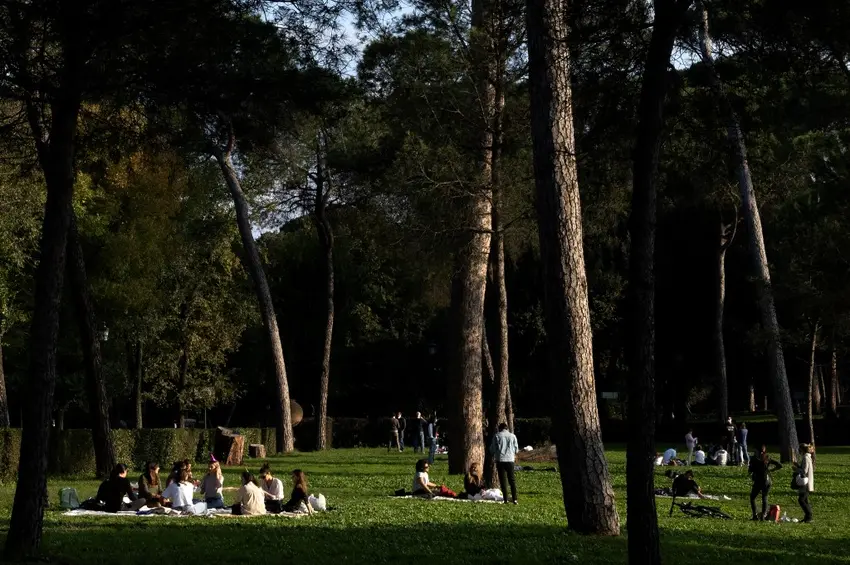
Slobs rejoice: no one in this city cares how you dress, and many Romans wear a tracksuit or loungewear when moving through the city.
There's a sizeable contingent of middle-aged Roman men for whom a navy windbreaker, almost always accompanied by sunglasses and a bald pate, is practically their uniform (making them all look like bus ticket inspectors, whose uniform it actually is).
That doesn't mean you can't dress stylishly if you want, or that you won't see plenty of well-dressed people walking around, especially in the more fashionable neighbourhoods near the centre. But you're not under pressure to dress up if you don't feel like it.
Unlike some European cities, Rome is refreshingly laid back when it comes to fashion – perhaps because the city's so beautiful no one feels the need to compensate with their clothing.
Or what job you have
This lack of pretension extends to other aspects of life in Rome, too: dogs are allowed in most restaurants, as are small children; and while it's not exactly taboo to ask people what they do for a living, it's just not considered that important.
At one dinner with friends, the topic of what everyone did came up. "Io lavoro" (I work) was one person's response – their assumption being that they were being asked whether they had a job or were studying, as those are the two options available.
If you've lived in cities where the first question you get asked at a party is what you do, it can feel strangely liberating to live in a place that doesn't care.
READ ALSO: REVEALED: How expensive is life in Rome in 2025?
The other side of this coin is that the reason people don't often want to talk about work because there are very few good jobs available in Rome. Many Romans who would like to stay in their city of birth are forced to move abroad, or at least further north, in search of better career opportunities.
If you're a foreigner who's managing to make a decent living in Rome, then, you're part of a lucky minority.
It's a good idea to carry cash
When I first wrote this article a few years ago, I said that cash was expected for almost all smaller transactions in Rome, like getting a caffe at your local bar.
In 2025, three years after Italy introduced fines for all businesses that refuse to accept card payments, Rome has mostly caught up with most of the rest of the world, and you should now be able to pay for even small items by card or mobile phone.
It's always a good idea, however, to have cash on you in case you come up against a sign annoucing that il pos non funziona (the card machine is down) or a worker who simply defies the law by announcing they only take contanti (ironically in my experience, the biggest culprits here are state-run museums or historic buildings).
When this happens, just any old cash won't do – exact change or as close as you can get is what's wanted.
Unfortunately, cash machines in Italy are set up to primarily distribute €50 notes, which makes trying to offload these on disgruntled vendors (most of whom are not shy about making clear that they would rather be doing almost anything other than talking to you) a fun challenge.
Bad public transport and worse driving...
I'll go out on a limb and say Rome's metro system actually isn't too bad if you're travelling outside peak times, when carriages can get very overcrowded.
But if you need to take a bus or a tram you could be in for a very long wait, and there's a statistically not insignificant chance it might catch fire with you on board.
As a pedestrian, you must also accept you occupy the bottom rung of the rusted ladder that is Rome's urban transport network.
Corner junctions that require traffic lights to be safe have faded, poorly lit pedestrian crossings – if they have one at all.
READ ALSO: Five of the best rooftop bars to visit in Rome
When you arrive at a crossing, it's by no means a given that cars will stop for you, so you have two options: stand by the side of the road trying to make eye contact with drivers until one is kind enough to let you cross; or shuffle slowly into the street in a high-stakes, very one-sided game of chicken.
Make sure to warn your foreign friends who come to visit so they don't give you a heart attack by launching themselves into the road without looking, narrowly avoiding being mown down.
... But good long-distance train services
I can't really give Rome credit for this, but as creaky and decrepit as the city's local public transport services are, Italy's long-distance train services are fast and reliable.
Although tickets aren't cheap, a Frecciarossa fast train will get you from Rome to Florence in 90 minutes, or from Rome to Naples in an hour and a quarter. Milan, all the way up north, is just a three hour train ride away – doable as a long weekend trip.
READ ALSO: Five essential tips to save on train tickets in Italy
Even the slower regional train services are reasonably fast, and good value for money.
And if you drive, your options expand even further: you can be in Abruzzo's rugged mountains to the east within a couple of hours of setting off, or on the Amalfi coast in three and a half. As travel bases go, Rome is a good one.
A distinctive food culture
Food in the Italian capital is cheap and good - so good that Rome was crowned the best food city in the world in Tripadvisor's 2025 Traveler's Choice Awards.
Newcomers might be surprised when they find out what constitutes traditional Roman food, i.e. offal. Tripe, oxtail, liver and tongue are all items you can expect to find on the menu of an old-school Roman restaurant.
These days, however, most diners prefer tamer dishes, which are available in the form of spaghetti carbonara, pasta gricia (similar to carbonara but without egg), or the tomato-based amatriciana - all crowd-pleasing Roman specialties.
There's even an option for vegetarians: cacio e pepe, a kind of gourmet mac 'n cheese.
While Rome does have a world class food scene, it has nowhere near the variety of international cuisine on offer in a more cosmopolitan city like Milan. In spite of this, there are some good alternatives to the local staples if you know where to go.
Look for establishments (usually found in neighbourhoods outside of the city centre) that mainly serve diaspora communities who want a taste of home. If there are parts of the menu written in a language you can't understand, that's always a good sign. Be respectful: these places will happily serve you, but they probably weren't created with you in mind.
Comments