
New Year’s Day
New Year’s Day (capodanno) is a national public holiday in Italy, which means that many around the country will start 2025 with a Wednesday off work.
READ ALSO: Calendar: How to make the most of Italy's public holidays in 2025
There won’t be much in the way of celebrations on the day; most Italians prefer to do all of their partying on New Year’s Eve (notte di San Silvestro) and get some rest the following day.
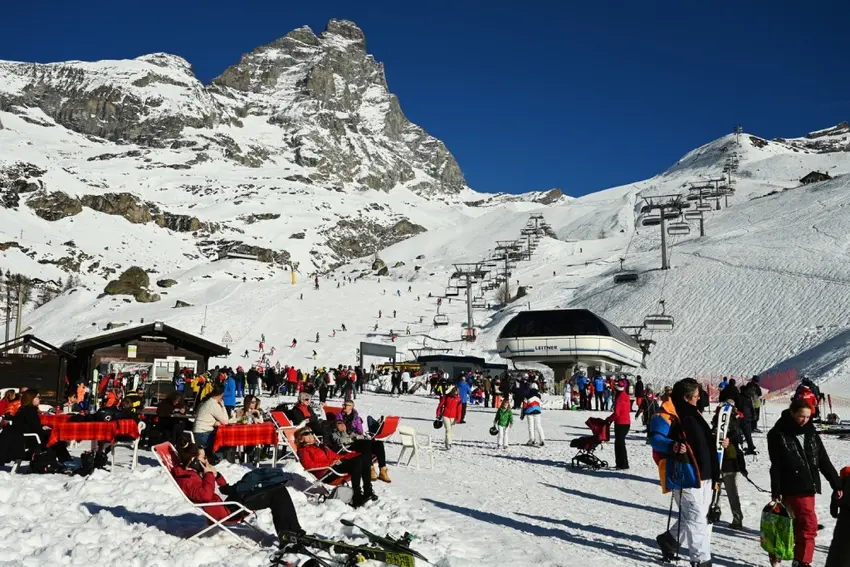
For those enjoying long holidays, New Year’s Day is the perfect time to travel to the mountains for a settimana bianca.
National ID code for holiday rentals
New rules requiring owners of holiday rentals in Italy to hold a national identification code, or CIN, came into force on September 1st, but penalties for those flouting the rules haven’t been enforced yet.
Sanctions were originally scheduled to kick in from November 2nd, but the date was later postponed to January 1st due incomplete online infrastructure.
Under the new rules, the CIN code must be displayed on a property’s front door or doorbell so as to be clearly visible from outside. Hosts will also have to include it in the accommodation’s website (if applicable) and on any online or social media listing, including on platforms such as Airbnb and Booking.
2025 budget law
The changes and measures included in Italy’s 2025 budget will come into force from January 1st.
At the time of writing, the budget bill hasn’t yet been approved by parliament, but it is expected to be given the final go-ahead by lawmakers in the upper house by Saturday, December 28th.
The 2025 legge di bilancio’s path through parliament has been far from straightforward, with several rounds of amendments delaying its approval until late December.
An overview of the main changes Italian residents can expect in 2025 is available here.
Changes to home renovation 'bonuses'
Italy’s main home renovation ‘bonuses’ – state schemes offering discounts on the cost of home renovation work – will be further scaled back from January 1st.
After dropping to 70 percent of overall construction expenses in 2024, the maximum claimable discount under the popular superbonus will go down to 65 percent in 2025.
Further, barring some exceptions, the scheme will only apply to condominiums and small apartment buildings (from two to four residential units).
Key changes are also set to affect how much homeowners will be able to claim under Italy’s ecobonus, sismabonus and bonus ristrutturazioni (renovation bonus).
For details on these and other renovation bonuses in 2025, see our guide.
Tourist tax hike in Milan
Milan authorities are set to raise the local tourist tax – a charge imposed on visitors staying in accommodation overnight – in 2025.
The charge will increase for all types of accommodation, from hotels and hostels to holiday rentals and B&Bs.
The biggest increase will affect stays in four- and five-star hotels, with the daily fee set to go up from €5 to €7 per guest.
Winter sales
Bargain hunters, on your marks: Italy’s winter sales (or saldi invernali) will begin across almost all of Italy on January 4th.
The only exception is the autonomous Bolzano province, northern Italy, where the winter sales season will start on January 8th.
Epiphany
Epiphany, which marks the date when the Three Wise Men reached the manger sheltering Mary, Joseph and Jesus according to Catholic tradition, is a public holiday in Italy.
Conveniently, it falls on a Monday in 2025, meaning many around Italy will enjoy a three-day weekend in early January.
January 6th is also when Italians celebrate the Befana, a good witch who, according to popular folklore, visits the houses of all children the night before the holiday, filling their stockings with candy if they’ve been good or lumps of coal if they’ve been bad.
La Befana is a beloved character in Italy, but celebrations on the day are generally bittersweet as January 6th marks the end of the holiday season.
Children go back to school
Epiphany also marks the end of Italy’s winter school break, with children filing back into their classrooms on Tuesday, January 7th.
It’ll be a long time before pupils in Italy enjoy another break, with the Easter holidays starting on April 17th for most regions.
UK ETA visa requirement for non-EU nationals
The EU's new border checks are currently fraught with uncertainty, but UK plans to introduce an extra visa waiver known as Electronic Travel Authorisation (ETA) are already well underway.
The ETA requirement is already in place for citizens of certain countries, but will be extended to all non-EU nationals entering the UK from January 8th, and then to EU nationals from April 2nd.
The ETA is a £10 visa waiver that must be applied for online in advance, and, once granted, lasts for two years. Find full details here.
World Pizza Day
Though we doubt anyone needs much encouragement to choose pizza for dinner, World Pizza Day on January 17th will be the perfect excuse.
READ ALSO: Five key tips for ordering pizza in Italy
If you’re wondering why January 17th was chosen as 'Pizza Day', that’s because it’s the feast day of Saint Anthony the Abbot, the patron saint of pizzaioli (pizza makers).
Deadline to opt out of Italy’s TV licence fee
Italy’s TV licence fee (often referred to as canone) is based on an automatic billing system, with the charge being automatically added to a household’s electricity bill, usually in the form of a monthly charge on bills from January to October.
Homeowners who don’t have a TV set must complete and submit the relevant payment exemption form with Italy’s tax office by January 31st of each year.
The fee will increase to €90 a year (up from €70) in 2025.
Comments