
Warm weather, unique natural landscapes and famed cultural and culinary traditions are just some of the reasons that make Italy a popular destination for people looking to move from abroad.
According to the latest available data, there are over five million international residents in Italy, including some 51,870 native English speakers.
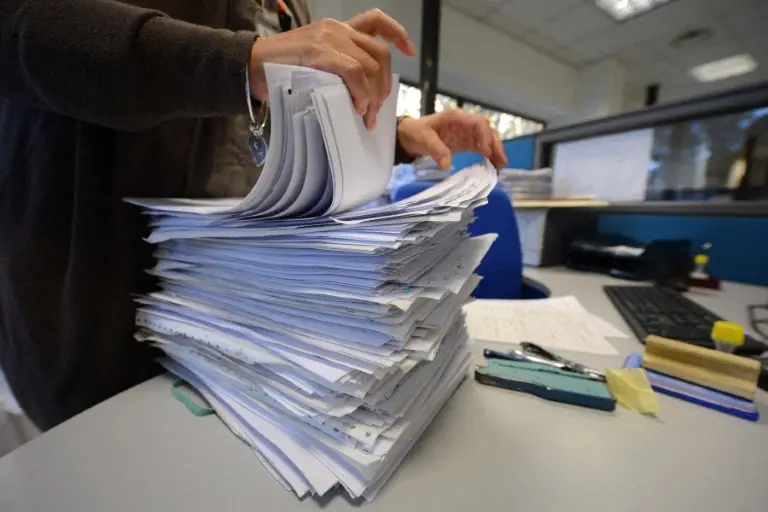
But, as appealing as life in the country may be, Italy is also consistently rated as one of the hardest places for foreign nationals to settle in, with bureaucracy frequently singled out as the most difficult aspect of life in the country.
We recently asked readers of The Local to share with us what they thought was the most troublesome part of Italian bureaucracy.
We received answers from all corners of the country, from Piedmont to Puglia, with dozens of international residents offering their perspectives and personal experiences.
‘It takes 350 days to get a permit that is good for ten more days’
Nearly a quarter of respondents said the hardest part of Italy’s burocrazia involved renewing their residency permits (or permessi di soggiorno).
Obtaining an Italian permesso di soggiorno is a necessary hurdle for non-EU nationals planning to stay in Italy for more than 90 days, and is also one of the very first things they have to deal with as the request must be filed within eight working days of arrival in the country.
The permesso essentially connects your visa and passport information to your biometric data and place of residence, giving you legal grounds for remaining in Italy.
The most common types of permesso come with one- or two-year validity, after which the holder must renew the document.
But permit renewals in many areas of the country have long been plagued by exceedingly long waits, which have proved to be a major source of stress for dozens of applicants and disrupted the travel plans of many international residents.
William Nemir in Perugia, Umbria, said the renewal process is “not difficult per se,” but “the delays between submitting the documents, getting an appointment at the Questura [police headquarters], and then receiving the Permesso” are what makes it so hard.
“Last year, my Permesso had expired by the time I received it,” he added.
Bill, living in Italy’s northern Piedmont region, also stressed the overwhelming length of the renewal process, saying that it “takes 350 days to get a permit card that is good for only ten more days”.
Sejuti, writing from Venice, said that it currently “takes a year to get an appointment” in the northern city and “if a document is missing or is lost, the whole process becomes extremely complicated”.
Martin Maier, in Abruzzo, said renewing a permesso involves "variable requirements, endless waiting, status not available [and] queuing up at the Questura".
"It is up to you to determine if there is a problem, they will never tell you," he said.
When asked for tips on how to best deal with long waiting times, the majority of readers said they were unsure that anything could really simplify or shorten the process, but some said enlisting the help of an Italian attorney can help with the relevant procedures.
Two respondents also said that having a good command of Italian may not make the renewal any easier, but can take some stress off your shoulders.
‘Complicated tax rules and obscure codes’
Besides long waiting times affecting residency permit renewals, several respondents expressed frustration over the lack of clarity within Italy’s tax system.
Tim Spencer, who lives in Monza, Lombardy, said it is hard to navigate “complicated tax rules, multiple tax schemes, pages and pages of obscure codes” even if you are fluent in Italian.
The fact that “even the professionals seem to interpret the rules differently” can further complicate things, he added.
Jim, who lives in Milan, said that, when he and his partner arrived in Italy, “it was extremely unclear what our tax obligations were and how and when to fulfil them.”
“A commercialista [accountant] was obviously essential and by luck we obtained one just in time, but it then transpired that the commercialista themselves had been filing our taxes incorrectly for four years, so we owed far more than we thought, along with penalties.”
READ ALSO: How does Italy decide if I'm a tax resident in the country?
Alison Honor in Alberobello, Puglia, stressed how difficult “finding out what taxes you need to pay” is, also mentioning that “no one tells you that you need to organise and calculate the IMU tax” in reference to Italy’s property tax.
‘Officials don’t know what they’re doing’
Several readers pointed out that staff at public administration and government offices often offer little in the way of help to struggling residents.
Joe Wheeler, in Padua, Veneto said: “Officials often don't know what they're doing. They are not aware of the law, due process or procedure. And they can be quite dogmatic in their ignorance.”
Speaking about the struggles he faced when applying for a carta di soggiorno (biometric residency card) for Britons covered by Withdrawal Agreement provisions, he added: “We were told quite directly, with raised voices, that acquiring the document we were entitled to was impossible. We eventually did get issued the document, but only after a huge amount of stress and persistence.
“What gets me is that those who said it was impossible continue in their ignorance.”
READ ALSO: 5 key digital resources to help you take on Italian bureaucracy
Donald Law, in Pisa, said that many staff “seem indifferent to any deadlines and seem to work at a very slow rate, refusing to explain what is the reason for any delay.”
Finally, Richard Penhaligon, in Reggio Emilia, said that the most problematic part of Italian bureaucracy is “knowing you are in the hands of individuals rather than a tick box system and if they are not any good at their job you can waste months waiting and then start again”.
“Individuals can be helpful or terrible and mostly terrible we find,” he added.
Do you agree with our readers' views? Let us know in the comments section below.
Comments (9)